
Bike Rack program
We install and repair roughly 150 bike racks on City of Boston sidewalks each year.
We want people to bike confident that their journey will end with a safe and convenient place to park. This is one of the ways we aim to quadruple the number of people who bike to work by 2030.
-
Still have questions? Contact:
Boston Bikes
-
 1 City Hall Square, Room 721
Boston, MA 02201


OUR RACKS
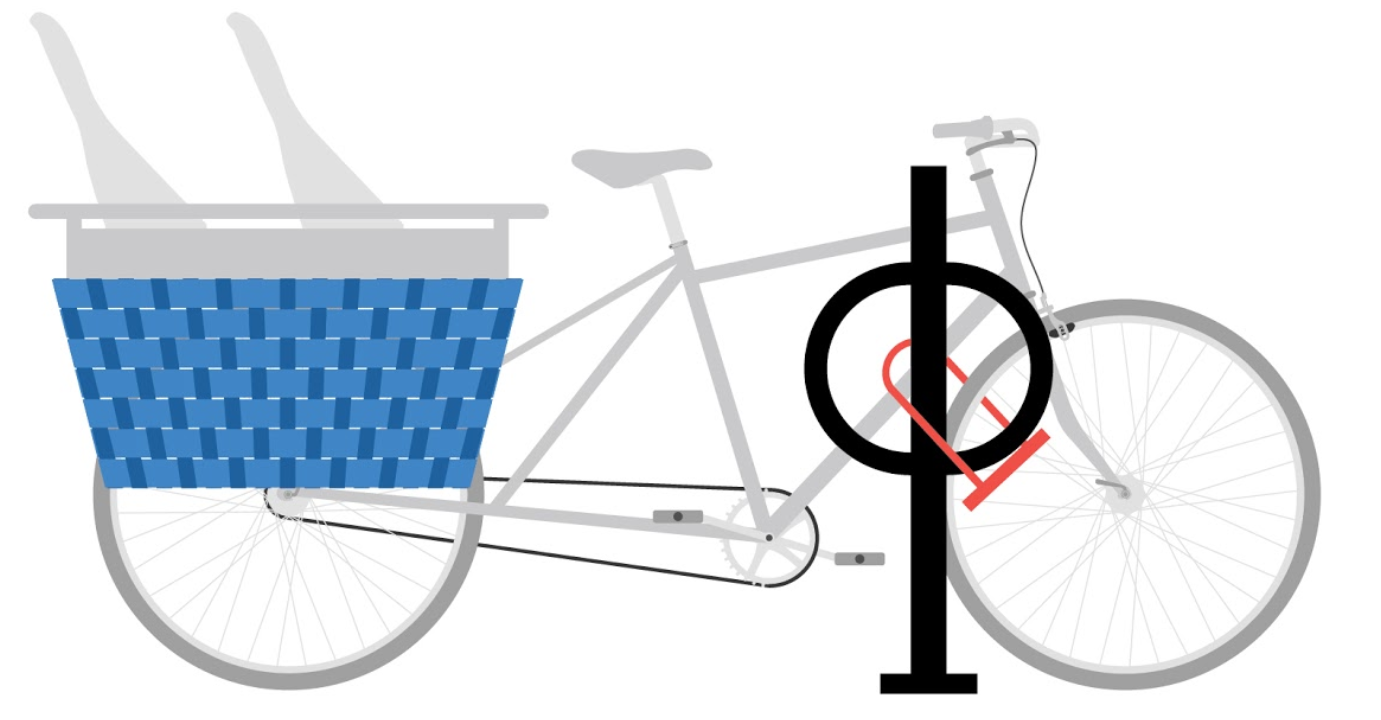
The City of Boston’s standard rack is a black, powder-coated post-and-ring rack. These racks meet all of the City’s performance criteria. They are the only racks approved for installation on City sidewalks, plazas, and other locations in the public right-of-way. Each post-and-ring rack provides two bike parking spaces. They may be installed in a series to create parking areas of variable quantities.
All other racks, including custom racks, must be pre-approved by the Transportation Department as satisfying the City’s performance criteria. These criteria ensure that racks support bikes upright, allow users to lock their bikes securely, and are intuitive and accessible to use.
BIKE PARKING GUIDELINES
We want everyone to have a safe and convenient place to park their bike—at their residence, place of employment, school, or other everyday destination.
COMPONENTS OF THE GUIDELINES
High-quality bike parking encourages more individuals to bike regularly and helps them feel safe doing so. Use these guidelines when siting and installing racks in Boston.
How to site, design, and install bike parking
Calculate bike parking requirements for new developments
Evaluate a rack against the City's performance criteria
How to install a bike rack into an existing concrete surface
How to install a bike rack into a new concrete surface
How to install a rack into bricks or pavers (including permeable pavers)
What makes a good location?
Visitor parking meets the needs of people visiting businesses, institutions, residences, and other destinations for short periods of time. This is generally no more than a few hours. Because users may be infrequent visitors to a location, parking must be:
- visible from the public right-of-way
- well-lit during both daytime and nightime hours, and
- convenient — ideally less than 25 feet away from destinations.
Importantly, racks must preserve accessibility for people walking and using assistive mobility devices. We must leave at least 5 feet of clearance along sidewalks and other lines of travel. For more information, review our full siting guidelines:
Suggest a location
We prioritize racks in commercial corridors and in partnership with civic institutions, such as libraries and community centers. As of Fall 2026, we are working through a back log of rack installation requests that were submitted through 311 or Suggestions Form.
Report a broken rack

Report broken bike racks via Boston 311:
- over the phone by dialing 3-1-1 from any phone within Boston, or
- via the mobile app by using the "Other" category found under "General."
Note: If you are reporting the rack online or via the mobile app, please include a picture of the rack that shows what's behind it. This helps us locate the rack.
Report an abandoned bike
Report abandoned bikes via Boston 311:
- over the phone by dialing 3-1-1 from any phone within Boston, or
- via the mobile app by using the "Abandoned Bicycle" category
If you are reporting the bike online or via the mobile app, please include a picture of the bike that shows what's behind it. This helps us locate the bike.

If you believe a bike has been abandoned, it will be added to the list for our team to investigate. We investigate bikes in the order that they are reported. It may take up to one month for us to investigate a bike.
If the reported bike is identified by our team, we will then attach a tag to the bike. The tag warns the owner that the bike will be removed in a few weeks. The tag includes the case number reported through 311. The owner may simply move the bike or may call 311 to ask that the case be closed.
Tagged bikes are picked up by our team a few weeks after the tag has been attached. We store all bikes for at least one month. There is no fee to recover your bike. Before returning the bike, we need you to describe the bike, where it was locked, and otherwise demonstrate that the bike belongs to you.
If you believe we may have removed your bike, please email bostonbikes@boston.gov.
-
Still have questions? Contact:
Boston Bikes
-
1 City Hall Square, Room 721
Boston, MA 02201
