
Natural Hazard Mitigation Plan Update 2026
We're working to reduce or eliminate the City’s projected risks associated with natural disasters, and to adapt to a changing climate.
The City of Boston, through the Office of Emergency Management, is updating the 2021 Natural Hazard Mitigation Plan (NHMP). You can learn more about our plan update process, initiatives, and how to get involved below.
About The Planning
What is Hazard Mitigation Planning?
As a coastal and dense city, Boston is vulnerable to:
- flooding
- sea level rise, and
- urban heat islands, among many other natural hazards.
A Natural Hazard Mitigation Plan (NHMP) is a planning strategy to aid municipal, county, and state governments in understanding how to reduce the risks, vulnerabilities, and impacts associated with natural hazards to better protect people, homes, businesses, and critical infrastructure. Our goal is to pinpoint areas that need protection. We will then develop strategies to mitigate damages from natural hazard events.
Boston residents are stakeholders in this planning process. Your input and ideas for becoming more resilient will be valuable to our process. We hope you will join us and read about ways to get involved below.
WHY DEVELOP A HAZARD MITIGATION PLAN?
When updating the 2021 Natural Hazard Mitigation Plan, our goals will be to:
- Build informed, connected communities ready for natural hazards
- Protect the health and safety of the public
- Protect existing properties and structures
- Create community resilience and promote neighborhood-level education and stewardship
- Support vulnerable populations before, during, and after hazard events
- Work regionally to mitigate impacts from natural hazards to respond and recover from hazard events
- Enhance post-disaster recovery by fostering a collaborative mindset
did you know?
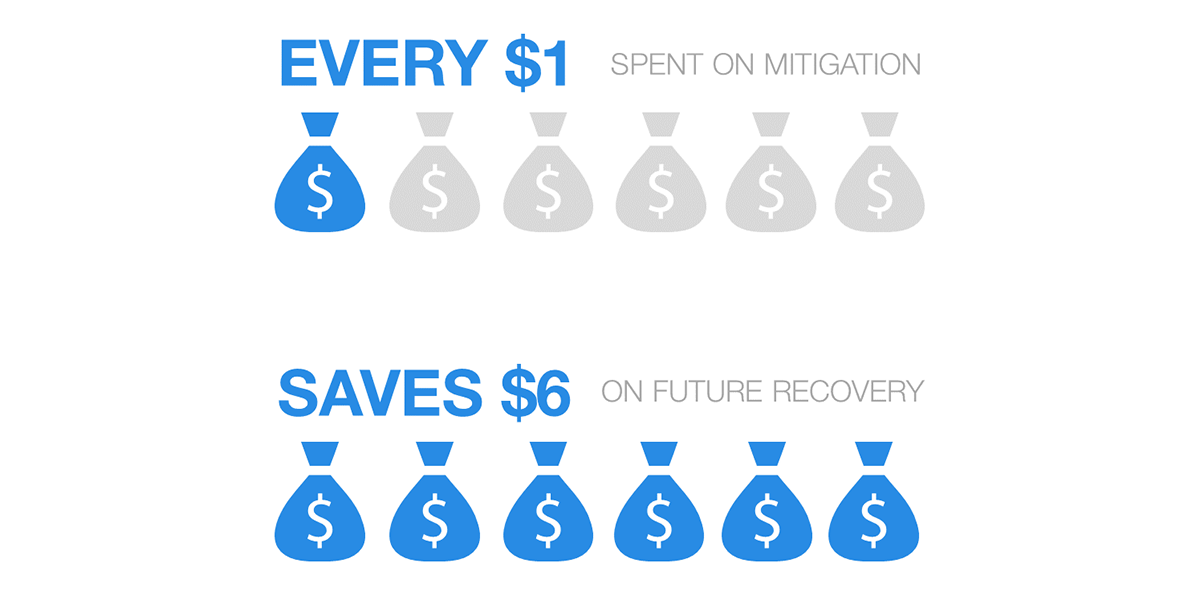
The National Institute of Building Sciences estimates that every $1 of federal grants spent on mitigation saves $6 in recovery costs after an extreme event.
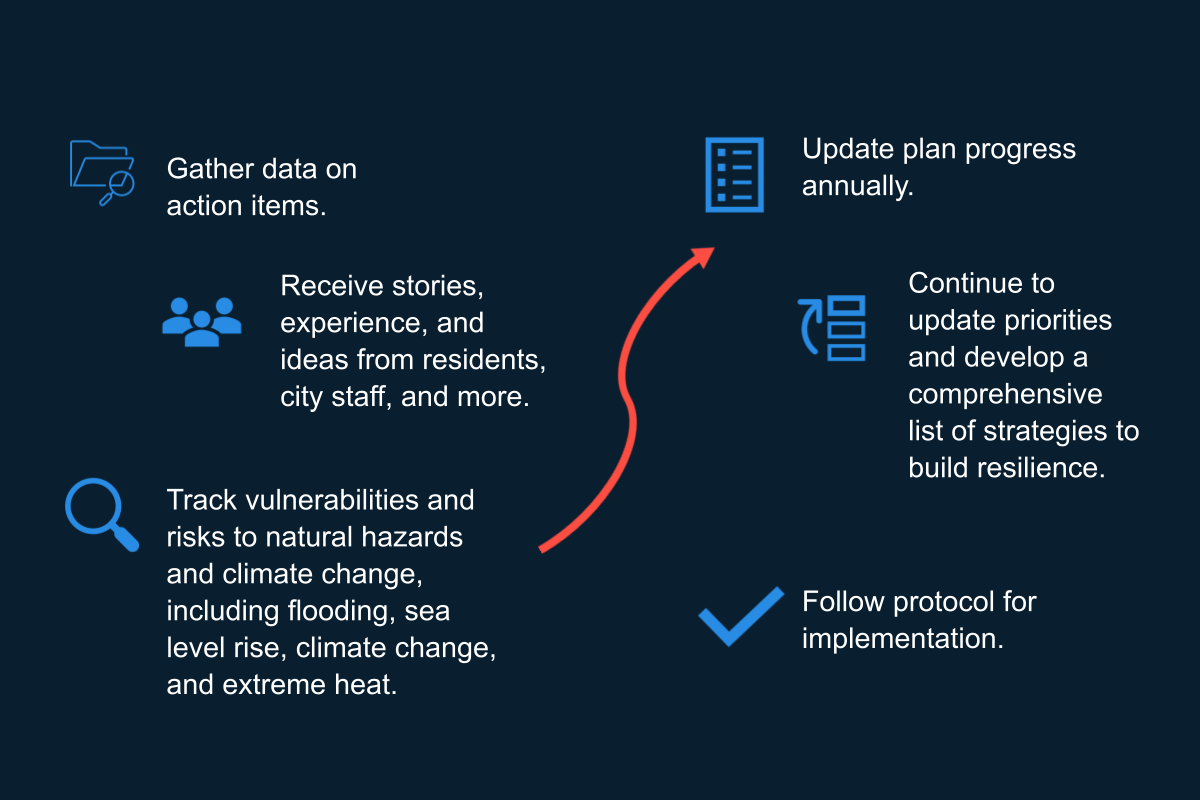
Our Process
Get Involved
Ways to add your voice now:
Take these quick steps to help the City plan for a more resilient future:
- Review the 2021 NHMP. For a brief overview you can also look at the executive summary.
- Complete the short survey to understand your experiences with natural hazards!
Check out these fact sheets:
Coordination
We’re staying coordinated with other ongoing and completed planning efforts.
We're creating a clear vision for how we will reach our carbon neutrality goals while also preparing Boston for climate...
We’re addressing climate impacts on the public right-of-way.
We want to hear from you! Tell us about past, current, and ongoing flooding across the city by filling out the Flood Survey...
Future Funding
The Federal Emergency Management Agency (FEMA) requires each jurisdiction to have an approved NHMP to be eligible for FEMA grants. These grants support implementation of the mitigation strategies identified in the plan. City departments also coordinate to identify and pursue additional funding sources that address natural hazard risks and support the protection of vulnerable populations.
Frequently Asked Questions
FAQPeriodic planning ensures that Boston’s hazard mitigation efforts are focused on today’s priorities. Investing in hazard mitigation can save lives and recovery resources, like money and time. Hazard mitigation aims to reduce the risk of hazard events. We want to ultimately lead to stronger communities that are prepared to shelter in place, but also to evacuate when necessary.
In addition, the Federal Emergency Management Agency (FEMA) requires the City to update their Natural Hazard Mitigation Plan every five years to remain eligible for funding. Through this update, the Boston will remain eligible for FEMA emergency and grant funding to improve the City’s resilience!
The NHMP is not part of Climate Ready Boston. But, we are staying coordinated with this initiative and other related efforts. The NHMP focuses on the City’s current vulnerability and risks. It uses experiences from historic events to inform future planning. However, we know that all investments should account for climate change. Therefore, we are incorporating findings from Climate Ready Boston related to:
- heat
- increased precipitation and flooding, and
- sea level rise and coastal surge.
The NHMP will also consider other risks that were not a focus of Climate Ready Boston. These include winter weather and earthquakes.
A Natural Hazard Mitigation Plan identifies the risks and vulnerabilities associated with natural disasters. These include the impact on:
- homes
- businesses, and
- critical infrastructure that keeps Boston running.
We assessed historic hazard events and researched climate change projections for Boston. We have pinpointed areas that need protection and develop strategies to mitigate damages. The hazards assessed in this plan include:
- flooding
- winter weather
- extreme wind events
- extreme temperatures
- fire
- geologic hazards, and
- drought.
Equity, inclusion, and access were key parts of this project. They informed the team’s approach to:
- outreach and engagement
- mapping analyses, and
- the identification and prioritization of adaptation action items to support vulnerable residents.
The Natural Hazard Mitigation Plan focuses on natural (geologic and weather-related) hazards. It does not include information on pandemics. However, we recognize that steps can be taken to better prepare for future pandemics. We collected community input and experiences to help inform how the City considers pandemic planning in relation to mitigating natural hazards.
The Natural Hazard Mitigation Plan is also not part of Climate Ready Boston, but rather a coordinated effort.

