Environmental Sensor Network on Blue Hill Avenue
A community-led action-research project focused on improving environmental quality in the neighborhoods from the Dudley Town Common to Franklin Park.
The Common SENSES project brings together community members, university researchers, and City officials to measure and support action to address environmental hazards like extreme heat, noise, and air quality along the northern Blue Hill Avenue corridor. Using data from the network of environmental sensors and community stories, community members and project partners will develop targeted strategies for a healthier, more resilient Blue Hill Avenue corridor. The project is a collaboration between the City of Boston, Dudley Street Neighborhood Initiative, Project R.I.G.H.T. Inc, and Northeastern University.
The goals of the Common SENSES project are:
- Actively engage the community at every phase, from identifying areas of interest to data analysis and developing solutions together;
- Work with the community to deploy 75 sensors that measure heat, noise, and air pollution; and
- Collaborate with the community to analyze the data and use the findings to inform policy and planning, while also developing tools and resources tailored to the community's needs.


Project Phases
Phase 1: Identifying Environmental Hazards
(September 2023 - July 2024)
Through workshops, community members identified the key environmental hazards negatively impacting the Blue Hill Avenue corridor as well as areas in the community that are comfortable and enjoyable to spend time in.
Phase 2: identifying sensor locations and deploying sensors
(November 2024 - October 2025)
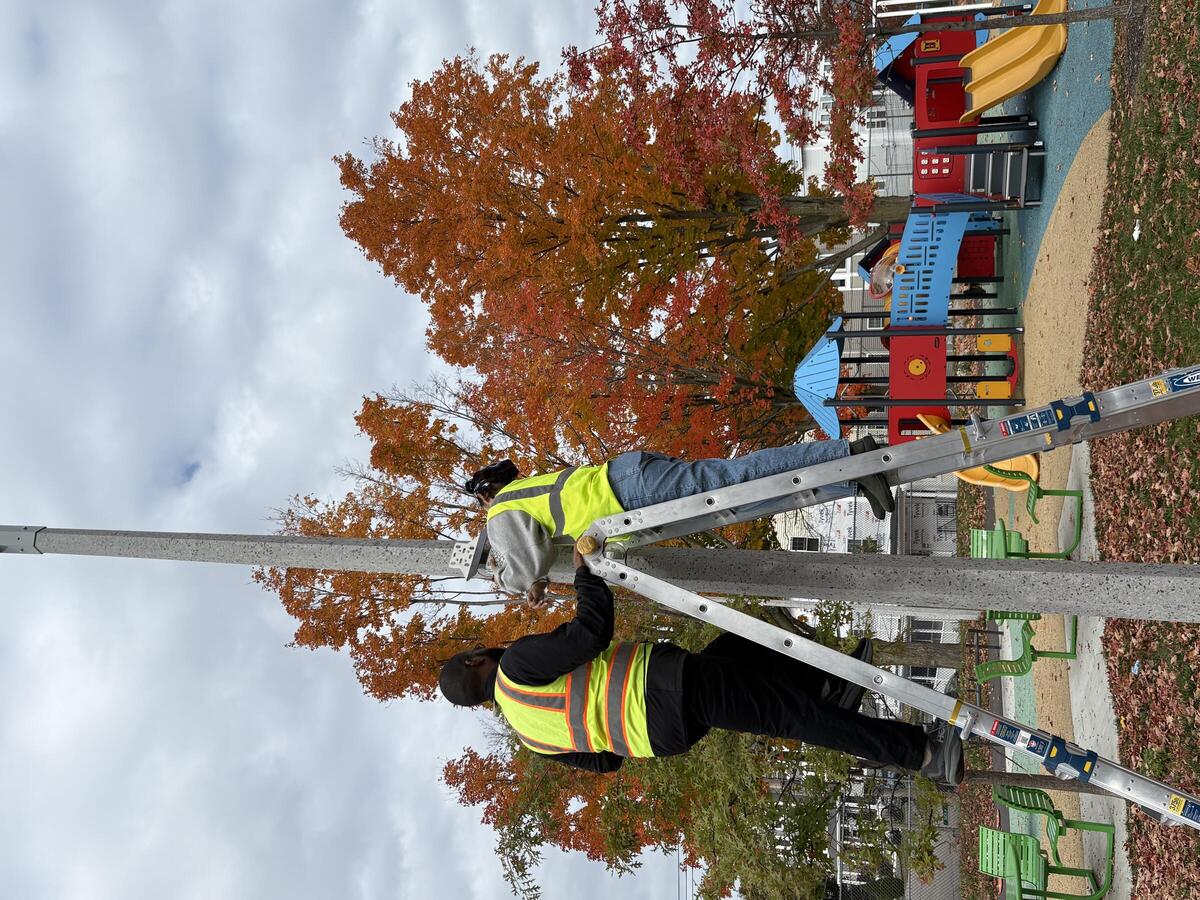
Deployed 24 air-quality sensors and 51 heat and noise sensors in locations identified through community stories and priorities shared during co-design workshops and events.
Phase 3: Modeling and Designing Solutions
( November 2025 and beyond)
Community members and project partners will analyze and make sense of the collected data, then imagine and co-design solutions informed by community knowledge and insights from the data.
Live Data and Community Stories
FREQUENTLY ASKED QUESTIONS
FREQUENTLY ASKED QUESTIONSAn environmental sensor is a device that monitors and measures different environmental variables. The City of Boston has previously deployed air quality sensors on street lights along Cummins Highway to understand the air quality before and after reconstruction. Community members played a key role in determining what environmental hazards the sensors along Blue Hill Avenue monitor. These sensors monitor air quality, heat and noise. Sensors only collect environmental data and NOT identifiable information.
Yes, the sensors deployed as part of the Common SENSES project are designed to protect privacy. The sensors DO NOT collect any personal or identifiable data, such as video or audio recordings. The data collected is strictly focused on environmental hazards identified by community members.
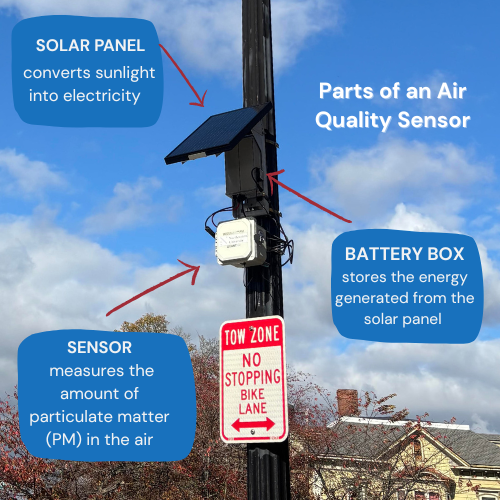
There are 24 QuantAQ air quality sensors deployed. The sensors provide measurements of PM 1, PM 2.5, PM 10, temperature, and relative humidity. More information about the air quality sensors can be found on the spec sheet.
Particulate matter (PM) is a mixture of solid particles and liquid droplets in the air that vary in sizes from so small they can only be seen through an electron microscope to large enough to be seen with your eyes, e.g., dust or smoke. There are different sources of particulate matter that include wildfires; pollen; car, truck, and bus emissions; and construction. Learn more.
According to the U.S. Environmental Protection Agency (EPA), air pollution can have a negative impact on human health. Yet, not everyone experiences its effects evenly. For example, women, children, and people of color can experience greater health risks.
These health effects can include heart disease, respiratory disease, and premature mortality. These health effects can also lead to increase hospital and emergency room visits and result in lost work and school days.
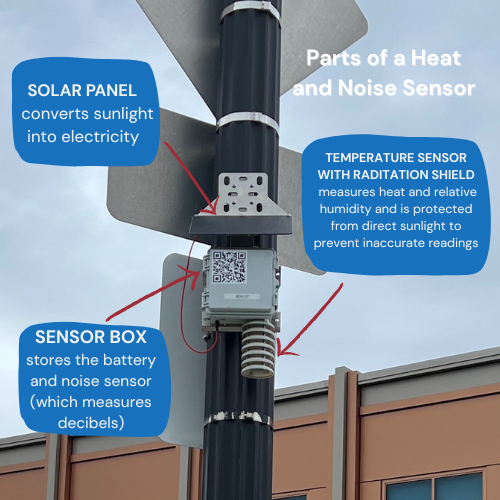
There are 51 noise and heat sensors built by Northeastern University's Environmental Sensing Laboratory deployed. The sensors provide measurements of temperature, relative humidity, and noise in decibels.
Workshops and Community Events
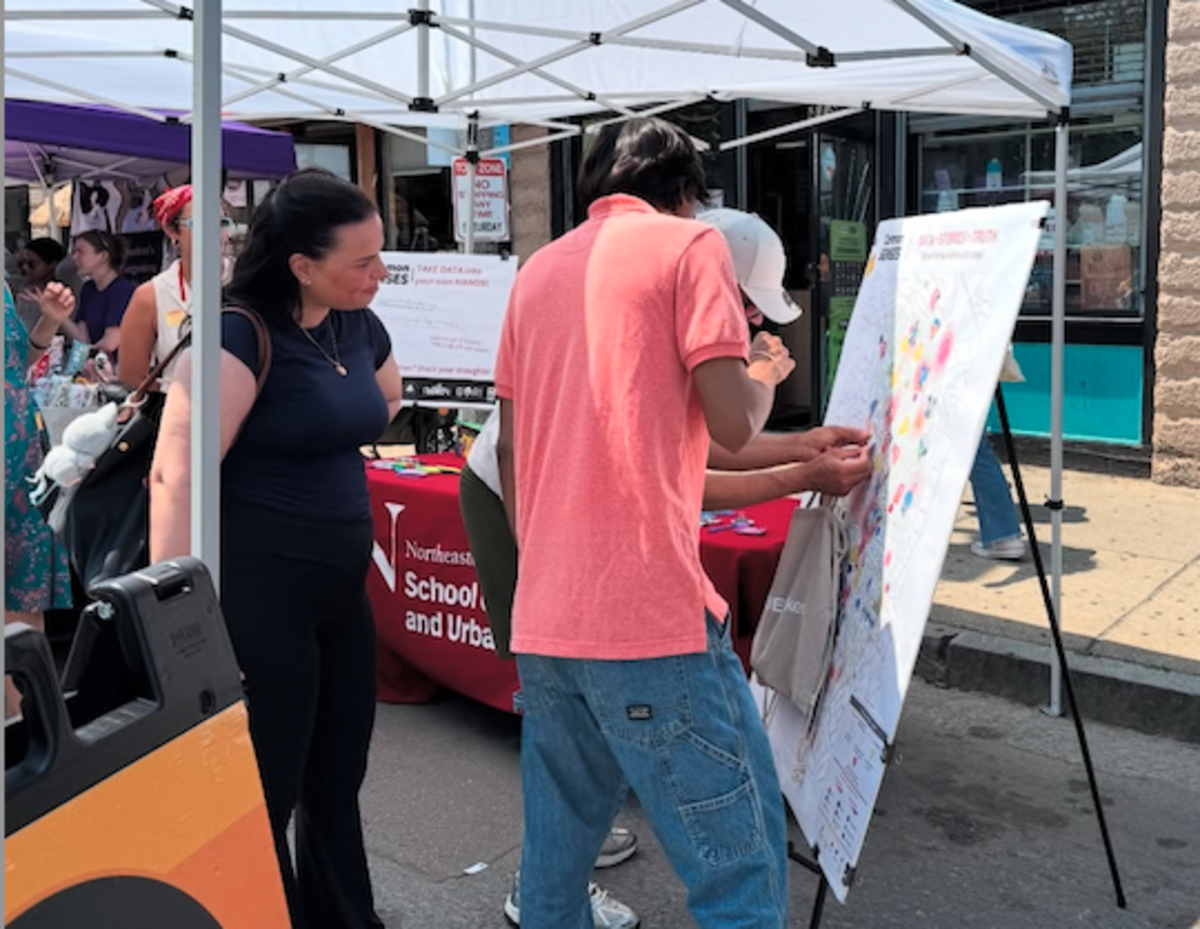
At seven co-designed community workshops, community members identified local hazards including heat, air pollution, traffic, and more and selected sensor locations based on areas of greatest concern or importance. Community members also shared hazard stories and identified additional locations at 17 community events.
Reference Locations
It is essential that sensors are placed at reference locations like comfortable streets, parks, or other green spaces, as these locations typically tend to be cooler and have better air quality. The data collected from these locations will provide a baseline or a helpful comparison to the places of interest.
Events
EventsThere are no related events available at this time!