
Spotted Lanternfly and Boston
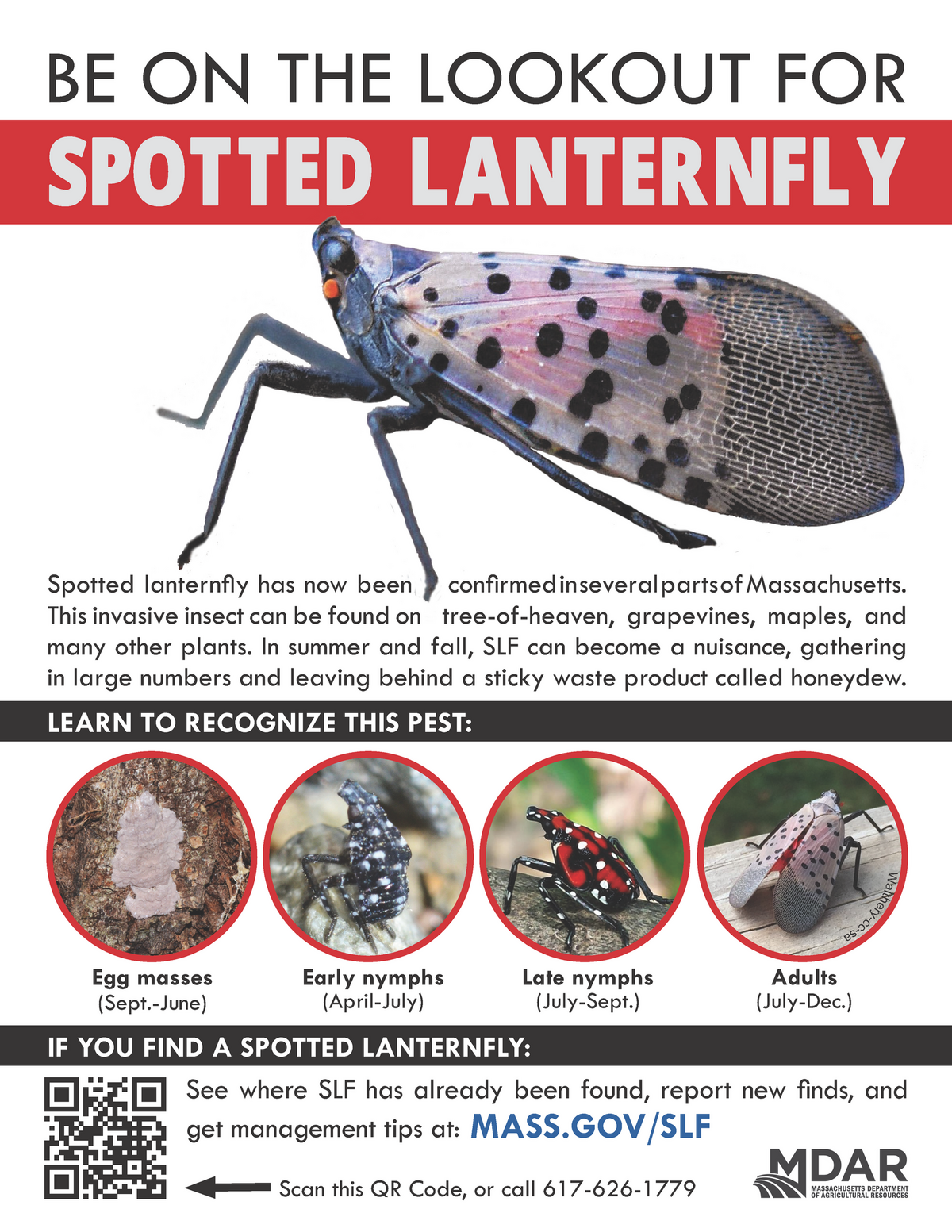
Spotted lanternfly (Lycorma delicatula), also referred to as SLF, is an invasive sap-feeding insect from Asia that was first found in the United States in 2014, in Pennsylvania.
SLF causes damage to trees and other woody plants by feeding on their sap. The first known infestation of SLF in Massachusetts was found in 2021. SLF has recently been found in several parks in and around the city of Boston.
While the main host plant of this pest is tree-of-heaven (Ailanthus altissima), SLF can attack a variety of trees, shrubs and vines. The tree-of-heaven is itself an invasive plant and it is not intentionally planted as a sidewalk tree or in parks, but many of them exist in wooded areas or in unmaintained, hard to reach areas. When populations of the insect grow to large numbers, SLF can become a nuisance as the insects leave behind a sticky waste product called honeydew. SLF can spread to new locations where there is a desirable host plant. They can even move over long distances by attaching to vehicles and other equipment or items.
As we deal with growing numbers of this latest pest infestation, it is important to be able to recognize SLF in its various stages and know what you can do about it. Linked on this page is some information from the Massachusetts Department of Agricultural Resources that may be useful to help stop the spread of SLF and to minimize insect populations if you find them near your home.
-
Have questions? Contact:
URBAN FORESTRY DIVISION


Videos
You're in the Driver's Seat
Inspect Your Vehicle for SLF
A short video explaining how to recognize the invasive spotted lanternfly, and how to ensure that you are not accidentally spreading this pest when moving vehicles in and out of infested areas.
Impacts of the Invasive SLF
If you are in Massachusetts and see signs of spotted lanternfly: 1) Check the online pest dashboard to see if you are in a known infested area. 2) If the city or town you are in is not marked infested, file an SLF report.
Managing SLF
A short video discussing the options for how to manage spotted lanternfly if you discover an infestation on your property.
Spotted Lanternfly Map
Fact Sheet
Who's Involved:

-
Have questions? Contact:
URBAN FORESTRY DIVISION
