
Getting Our Future Out of Traffic: Boston Pilots Emerging Transportation Technology for School Buses
With 20,000 students riding a school bus each day, the City of Boston is piloting emerging technology and smarter street design to give students more time in the classroom.
During the spring of 2025, Boston Public Schools achieved historic highs in on-time bus performance, hitting 94% in both March and June of 2025—a milestone that reflects years of systematic improvements to student transportation. But with 1,500 students still arriving late each day, the City recognized an opportunity to push further.
- Last updated:
-

-

-

-

BACKGROUND
Since the 1970s, the City of Boston has worked to fix systemic problems with student transportation. After the 1974 Morgan v. Hennigan federal court ruling, school desegregation advanced equity in our public schools - but resulted in complex and inefficient bus routes. Moreover, according to the MA Vehicle Census, traffic congestion exacerbated these issues with vehicle miles traveled increasing by 13% from 2019 to 2024.
In March and June of 2025, on-time school bus performance hit a high of 94%. But with 1,500 students still arriving late to school each day, Boston can do more to give students more time in the classroom. With the support of Bloomberg Philanthropies through its Mayor’s Challenge, Boston is committed to getting our future out of traffic. As one of 25 global finalists, this program gave the City the funding and program support to explore new solutions.
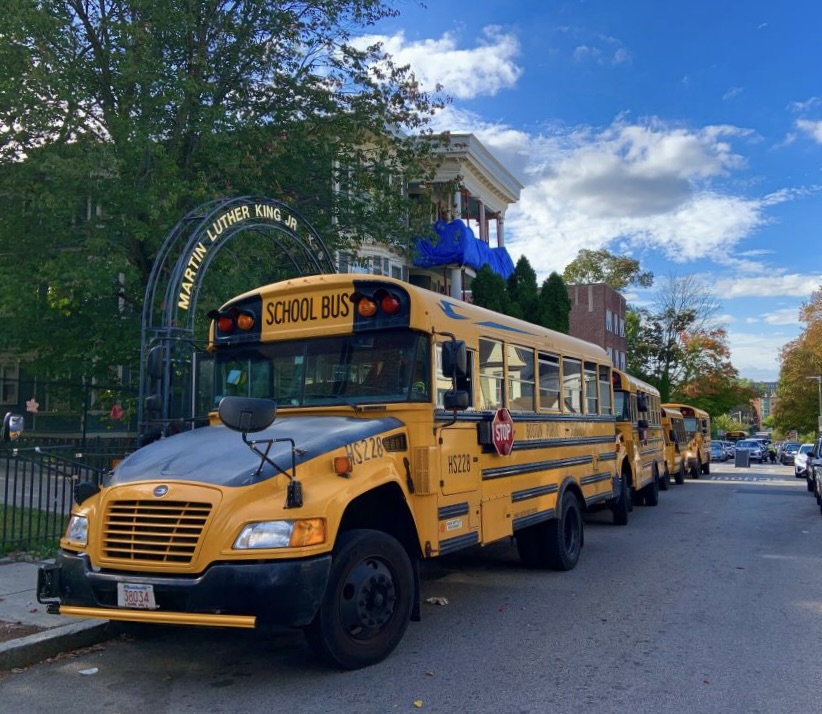
Through the Office of Emerging Technology and Streets Cabinet, Boston is pioneering AI-supported transit signal priority for school buses, in combination with near-school traffic flow changes (e.g., school bus-only loading zones). This is one of the first citywide deployments of intelligent transportation focused on getting kids to school on time: reliable arrivals, less stress for families, more learning time, and a blueprint for cities worldwide.
“We are honored to be selected as a finalist for the Bloomberg Philanthropies Mayors Challenge—and advance our idea to reimagine how Boston utilizes technology and AI to improve the routes our students rely on to get to school,” said Mayor Michelle Wu. “Municipal delivery encompasses some of the most fundamental public programs that exist – and mayors and their teams have an incredible opportunity to bolster the very services residents touch most. We are grateful to Bloomberg Philanthropies for recognizing the potential that local governments have when we can invest in innovation in ways that so directly and tangibly improve people’s lives.”
WHAT WENT INTO THE PILOT?
Boston’s Mayors Challenge pilot includes a series of interventions, including machine-learning technology, community engagement, and urban design.
- Transit signal priority (TSP) at six key intersections. In partnership with LYT, we tested AI-supported signal priority at six intersections along three main corridors: Dorchester Ave., Columbia Rd., and Washington St. This gives school buses green light priority at highly congested intersections, reducing delays and keeping them moving.
Unlike generic systems that only calculate distance and time, our system learns from the unique characteristics of each vehicle, including door operations, wheelchair ramp deployments, time-of-day patterns, and day-of-week variations. This means the system gets smarter over time, continuously improving arrival time predictions and maximizing the benefit to every bus on the road. - School-level interventions rooted in community engagement. At the King Elementary School, we hosted a block party with parents, students, teachers, school staff, and residents of the adjacent streets. Interviews and surveys with families revealed the value of bus-only zone designs. These conversations shaped the school bus-only zone pilot.
- School-level mobility redesign. We tested school-bus-only zones at the King Elementary School, including updated signage, new pick-up/drop-off zones for vehicles, and new traffic patterns with on-site facilitation.
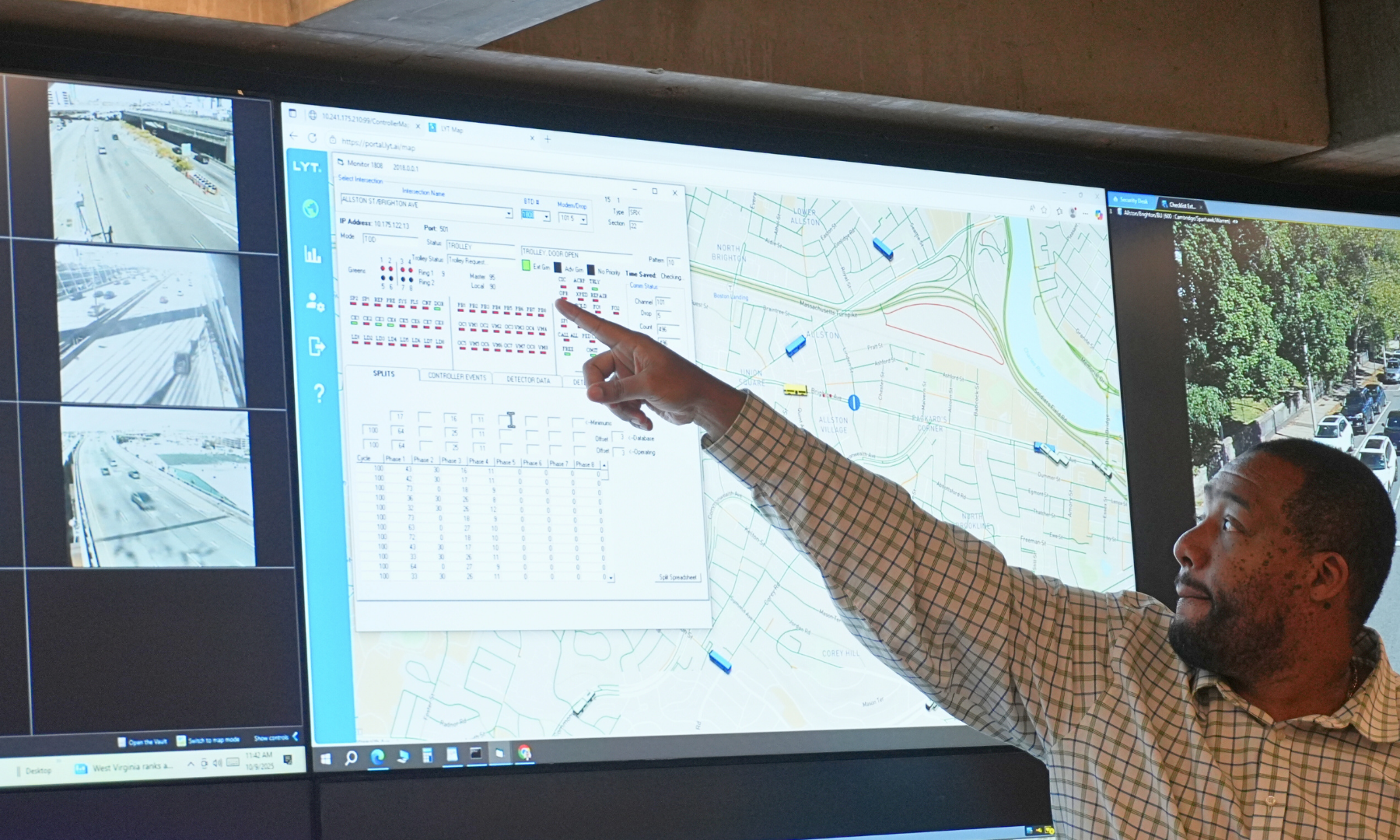
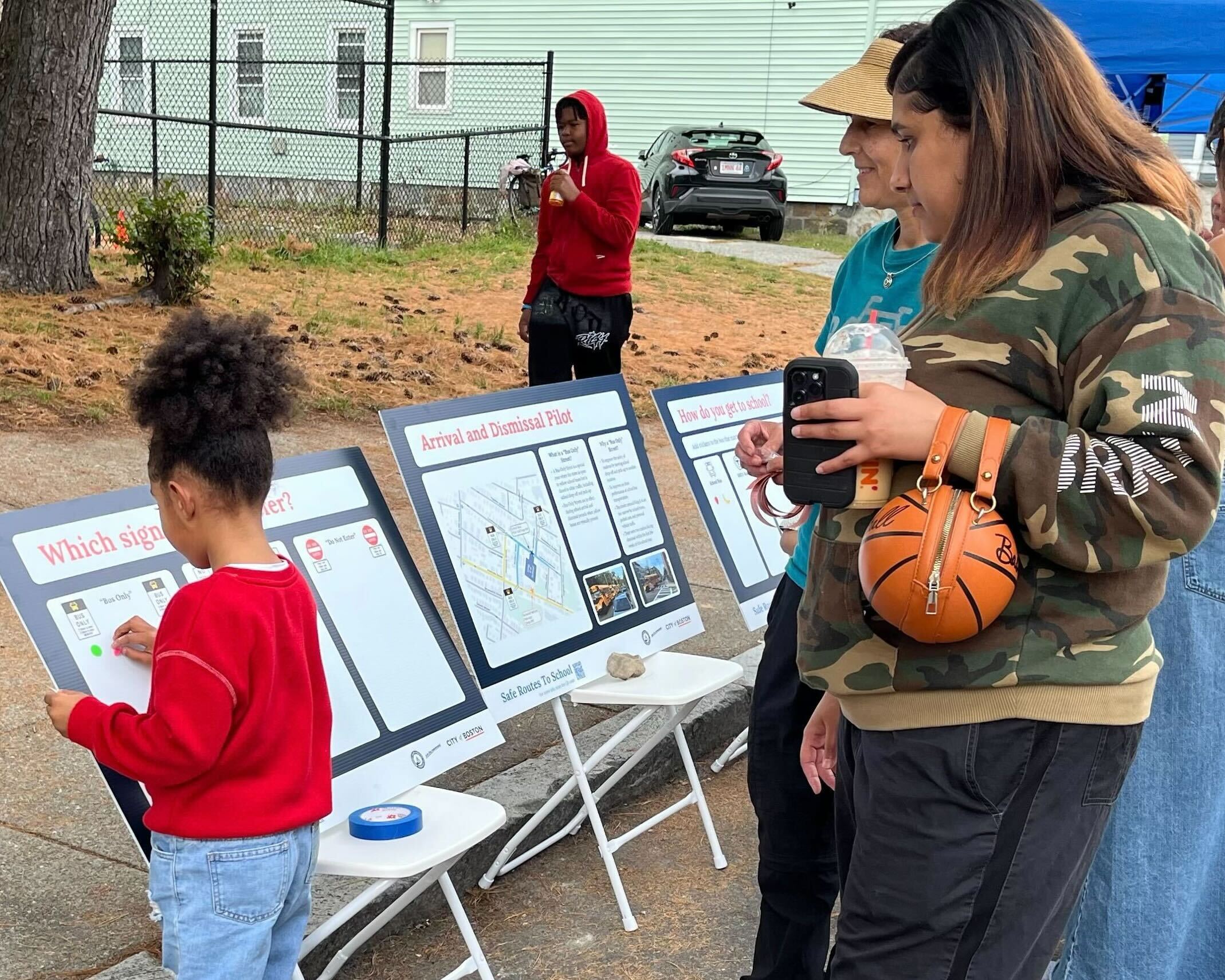
"Building on our efforts to make traffic signals more responsive to current conditions, we are testing multiple interventions – from AI-supported transit signal priority to redesigned school-bus-only zones – to give students more time for learning and activities," said Michael Lawrence Evans, Director of the Office of Emerging Technology. "These pilots will help us evaluate whether these tools can contribute to more reliable travel schedules at scale across the entire system."
“We are excited about the possibilities of this cross-City collaboration to reduce the impact of traffic congestion on our buses,” said Daniel Rosengard, Executive Director of Transportation for Boston Public Schools. “These efforts will help ensure more of our students arrive at school safely and reliably on time every day.”
WHAT'S NEXT?
Results from this project are anticipated for release by mid 2026. For more information on the Office of Emerging Technology, visit their homepage at www.boston.gov/oet. For more information on the Streets Cabinet, visit their homepage at www.boston.gov/streets. For more information on Boston Public Schools, please visit https://www.bostonpublicschools.org/.
ABOUT THE BLOOMBERG PHILANTHROPIES MAYORS CHALLENGE
The Bloomberg Philanthropies 2025 Mayors Challenge called on mayors to work with residents and entrepreneurs to reimagine their most essential municipal services, from public transportation to waste management, housing and shelter, emergency response, and more.
The winning ideas will come from city leaders who aim to raise expectations, of residents and civil servants alike, around what’s possible. They showcase the future of municipal service delivery —today. They remind the world that it is through local governments that we inspire trust, improve lives, and move the world forward from the bottom up.
- Last updated:
-
-
-
-
