
Worker Empowerment Cabinet Brings Workforce Leaders Together for 3rd Annual Workforce Innovation Symposium
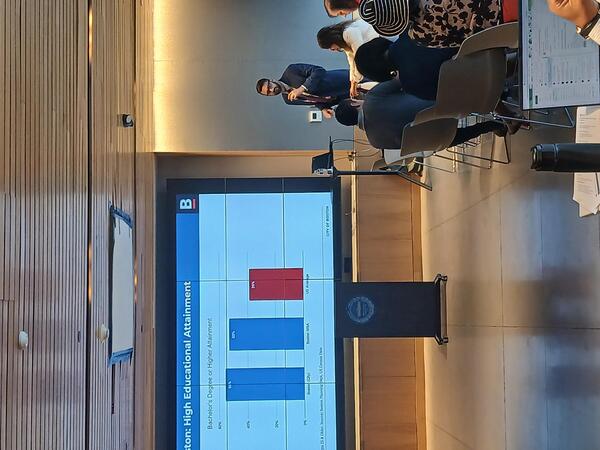
Last month, Chief Trinh Nguyen and the City of Boston’s Worker Empowerment Cabinet hosted the 2026 Workforce Innovation Symposium. The convening brought together workforce leaders, government officials, educators, technology partners, and youth-focused organizations from across the country to share promising practices and explore innovative approaches to youth employment, artificial intelligence, public-sector talent development, registered apprenticeships, career pathways, and economic mobility.
The gathering was timely for the workforce development field. Workforce systems are being asked to move faster and become more responsive, collaborative, and innovative as technology reshapes in-demand skills in real time, employer needs shift, funding becomes less certain, and barriers to good jobs remain. Convenings like the Workforce Innovation Symposium remain essential, giving practitioners space to learn from peers, step outside their day-to-day responsibilities, examine new models, and adapt promising ideas to better serve residents and create more equitable workforce pathways.
Learning Objectives:
Through plenary conversations, workshops, site visits, and peer exchanges, participants:
- Examined how legislative and policy changes are shaping workforce programs, funding, and service delivery.
- Explored how artificial intelligence and digital platforms can strengthen outreach, assessment, program matching, career coaching, and access to opportunity.
- Learned about registered apprenticeships, fellowships, and other earn-and-learn approaches that connect education with meaningful work experience.
- Compared approaches from cities across the country and identified promising practices that could be adapted locally.
- Strengthened relationships with workforce leaders who share a commitment to expanding economic opportunity and mobility.
Symposium Sponsors
The Symposium was sponsored by Dr. MiMi Haley, National Youth Employment Coalition; Dr. Unique Morris-Hughes, Secretary of Labor for the District of Columbia and Director of the Department of Employment Services; LaDonna Johns, Esq., City of East Orange Mayor’s Office of Employment and Training; and Trinh Nguyen, the Worker Empowerment Cabinet, City of Boston, who did a tremendous job curating the conversations that connected national workforce policy with the realities facing local programs and communities. Highlighted how Washington, D.C., has stayed nimble in developing programs that respond to residents’ needs and strengthen their access to employment. Models like SkillsNation and Pathways to Public Service demonstrated how local governments can continue to advance workforce development through innovation, coordinated systems, technology, and resident-centered program design, setting the stage for a broader conversation about Boston’s leadership in economic opportunity and workforce development. As host, Boston helped keep the discussions vision-forward and gave attendees models and lessons they could measure against the work underway in their own cities, states, and communities.
Two sessions stood out from the symposium’s full agenda: SkillsNation: AI & Automation and Pathways to Public Service & College Fellowship Program: Developing the Next Generation of Public Sector Leaders.
Session Highlights:
SkillsNation: AI & Automation
This session explored how Washington, D.C., is using SkillsNation and artificial intelligence to modernize workforce service delivery. Led by Kenneth Walker, Deputy Director of Federal Workforce Programs for the D.C. Department of Employment Services, and William Lopez, President & Co-Founder of BuildWithin, it offered attendees a firsthand look at how SkillsNation uses AI to connect residents with personalized career pathways, training programs, and employment opportunities based on their skills, interests, and goals.
The platform streamlines assessments, recruitment, and enrollment, allowing staff to spend more time coaching participants and building relationships. This reinforces the central takeaway that technology is most effective when it strengthens, not replaces, the human connections at the heart of workforce development.
Pathways to Public Service & College Fellowship Program: Developing the Next Generation of Public Sector Leaders
Led by Cedric Thompson, CEO and Founder, The Chart Academy; Maria Byrd, Vice President for Innovation and Transformation, University of the District of Columbia; Michael Taylor, Associate Director, DC Department of Employment Services; and Dr. Unique Morris-Harros, District of Columbia Secretary of Labor and Director, Department of Employment Services.
The session highlighted how two D.C. programs, the Pathways to Public Service and College Fellowship, combine paid work experience, classroom instruction, mentorship, and professional development to prepare residents for careers in District government. The model demonstrated what’s possible when government, higher education, and workforce partners intentionally build pathways into public service, moving beyond traditional recruitment to create real career growth opportunities for the next generation of public-sector professionals.
For Boston staff, the connection drew a direct line to their own work. City Academy, PowerCorps Boston, and other municipal workforce programs are already building this same kind of access to public service careers while helping the City develop a skilled and diverse workforce.
Shared Learning to Local Action
The Workforce Symposium reinforced that innovation doesn’t always start with creating something new. In some municipal cases, it can begin with identifying what’s already working elsewhere, understanding the conditions that made it work, and adapting lessons to meet local needs. For Boston, a few ideas are worth continued exploration:
- Keep building system coordination that creates more accessible entry points into workforce development and career resources.
- Continue working across municipal technology teams and external partners to explore responsible AI use that strengthens outreach, participant assessment, program matching, and career navigation.
- Expand stronger pathways into public service and other growing industries for high school graduates, young adults, college students, and residents from historically underrepresented communities.
Ultimately, the symposium gave participating communities room to test promising approaches, strengthen partnerships, and decide which shared ideas can help cities build meaningful pathways to employment, advancement, and economic opportunity for all residents.
- Last updated:
-

- Last updated:
-
