
Archaeological Field Methods
An in-depth explainer of archaeological field methods in Boston.
The City of Boston Archaeology Program or your archaeological contractor will advise you on how best to proceed if a project site has been deemed archaeologically sensitive. Only an archaeologist meeting the U.S. Secretary of the Interior's (SOI) qualifications may conduct an archaeological dig in Boston.
Monitoring
Archaeological monitoring may be an option when a site is known but disturbed, or when the likelihood of a suspected site surviving is lower. Monitoring must be conducted by a qualified archaeologist.
During archaeological monitoring, work at a site may move forward only while the monitor is present. Often, this involves the archaeologist literally standing beside an open trench as a mechanical excavator digs. The archaeologist watches what is happening inside of the hole as well as what comes out of the hole with the backdirt.
They may take photographs, write detailed notes, draw plan and profile views of the hole. They have the authority to halt work in order to investigate or document something inside the hole.
Phase I
Phase iA:
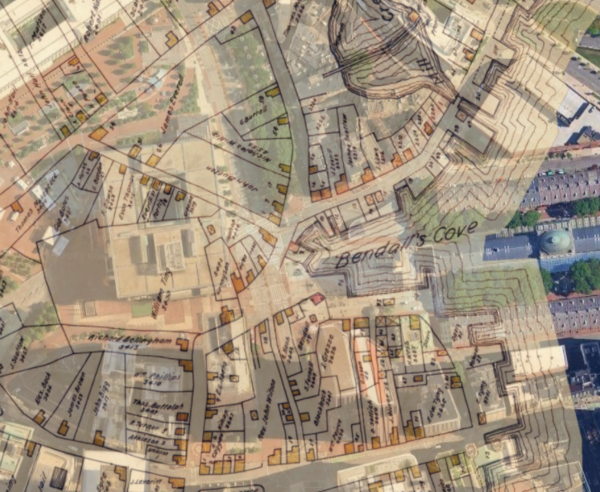
Also known as Reconaissance, this includes researching the project area to determine its likelihood to contain archaeological resources. This research includes consulting the Massachusetts Cultural Resource Information System (MACRIS) to see if any known historical or archaeological resources are present in the project area.
The researcher also consults historical maps and atlases to see how the area has changed over time and whether or not the soil has been disturbed by construction, landscaping, etc. Additionally, the researcher locates the historical deeds for the property to compile an ownership history of the property and understand how the land was used over time. We use websites including MapJunction, Atlascope, and FamilySearch to carry out some of our research.
This is often followed by a site walkover to observe the topography of the area and to document current conditions. This phase of investigation does not include excavation, but informs future excavation plans.
Phase Ib:
Once the sensitivity of the project area is determined, the contracted Principal Investigator (PI) and Project Archaeologist (PA) begin an Intensive (locational) survey. In Boston, this requires a State Archaeological Permit (SAP) from the State Archaeologist. Archaeologists then decide where to place exploratory 50 cm x 50 cm square hand-dug shovel test pits (STPs) to try and locate as many archaeological deposits within the project area as possible.
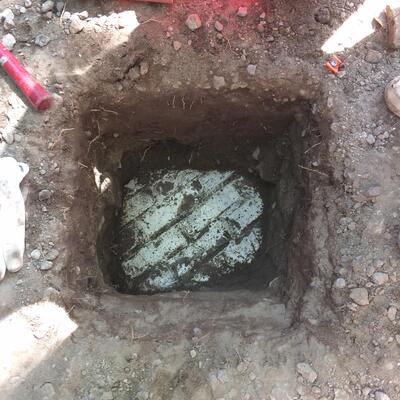
To lay out the STPs, archaeologists must establish a site grid over the project area. This is ideally aligned north-south with a datum in the southwest, though this can be variable on urban sites. STPs are typically placed in transects at 10 meter intervals, though sometimes this interval varies. If an STP reveals features or artifacts, an array of STPs may be excavated around it at smaller intervals.
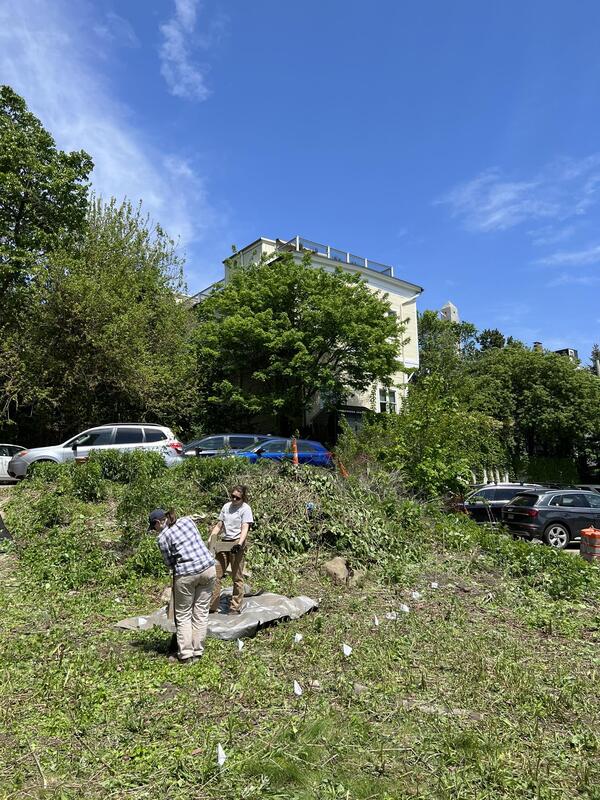
If enough archaeological deposits survive in good condition, the dig will progress to Phase II. If no site is found or if it has been too disturbed to yield usable data, no further archaeological testing will be recommended.
Phase ii
If Phase I testing results in the location of an archaeological site within the project area, the excavation progresses to a Phase II, or Site Examination. In addition to STPs, this phase includes the excavation of 1 m x 1 m square excavation units (EUs) and/or longer trenches. By opening up a larger window into the soil, archaeologists will work to determine the size and nature of the archaeological site.
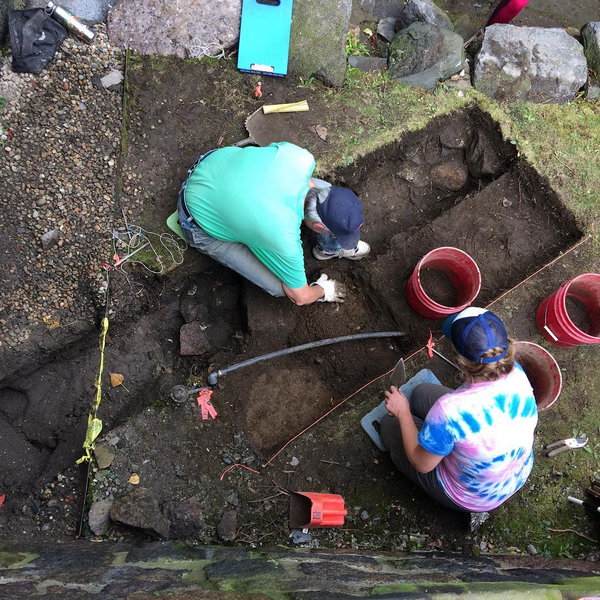
Archaeologists carefully measure, draw, and photograph all of their excavations, no matter the size of the unit. They dig in arbitrary 10 cm levels and watch the soil for changes in texture, color, and artifact density. They document these changes to better understand how and when different soils are deposited. For instance, while a wooden fencepost may not preserve in the ground, the decayed wood will leave behind a round stain of darker soil that a trained archaeologist will notice and recognize.
Determination of eligibility for the National Register of Historic Places happens at this stage. If the site is eligible for inclusion on the Register, efforts will be made to mitigate the impacts of the project on the archaeological site. This may look like redesigning the planned construction or even moving it altogether. If the site is determined to be eligible and mitigation by avoidance is not possible, the dig progresses to Phase III.
Phase III
The final phase of archaeological excavation is a Phase III, or Data Recovery. If a significant archaeological site cannot be avoided though project redesign, archaeologists will excavate as much of the site as is possible. These excavations can be large and often involve collaboration with state and/or federal agencies. The goal of data recovery is to systematically remove the site from the project area completely to gather as much information as possible.
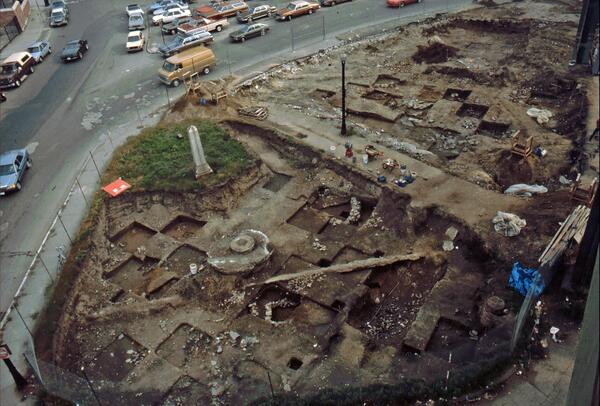
Excavation units are often laid out in "blocks," which leads to large areas being opened and excavated simultaneously. These tend to be infrequent in Boston, but have been used to excavate large sites like the City Square Archaeological District in Charlestown. Documentation and other field methods remain the same.
Archaeological survey is only considered complete after the Primary Investigator for the survey has submitted a completion memo to the City of Boston Archaeology Program and the project proponent receives written permission from the Archaeology Program to proceed with the project.
-
Still have questions? Contact:
Archaeology
-
 201 Rivermoor Street
West Roxbury, MA 02132


-
Still have questions? Contact:
Archaeology
-
201 Rivermoor Street
West Roxbury, MA 02132
