
Vision Zero
Vision Zero is our commitment to eliminate fatal and severe traffic crashes.
Serious injuries and fatalities on our streets are neither inevitable nor acceptable.
-
Have questions? Contact us:

OUR PRINCIPLES: BUILDING A SAFE SYSTEM
Vision Zero is not something achieved by individuals alone. It requires a transportation system that is designed and operated to prioritize human life.
Since adopting Vision Zero in 2015, Boston has embraced street safety as a systemic, public health issue. We understand our transportation system as a key determinant of population health, community well-being, mobility, and equity. Using evidence-based strategies, we are guided by core principles that make up a Safe System:
- Traffic deaths and serious injuries are preventable and unacceptable. We do not accept the loss of human life as a necessary cost to society.
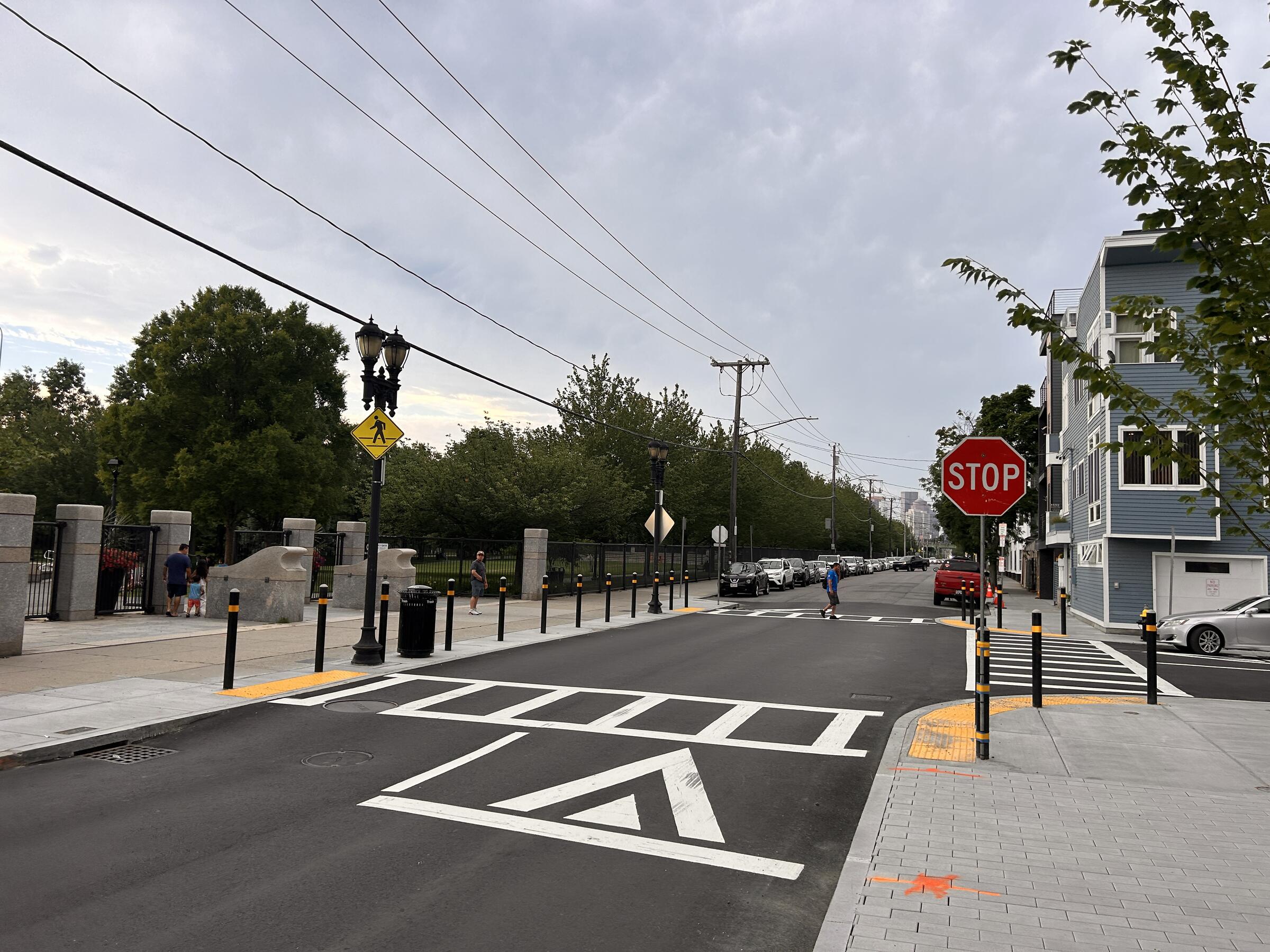
- The human body is vulnerable. We can respect and prioritize the limits of the human body by reducing crash forces resulting from the mass and speed of travelers.

- People make mistakes: When mistakes happen, no one should pay with their life. We can proactively anticipate human error and build in tolerance so that the consequence of a crash is not severe injury or death.

- We’re in this together. A safe system is the responsibility of all of us, including those who design and build our streets, those who use our streets, and those who provide care after crashes occur.

2026 Vision Zero Action Plan Update
With the 2026 Vision Zero Action Plan Update, Boston reaffirms its commitment to the values of Vision Zero and the goal of eliminating crashes in our city that result in serious injuries and fatalities.
Boston's streets are safer than when we began. Since 2015, injury crashes have fallen by about a fifth and fatal crashes by about a quarter. But we have much more work to do. Older adults account for a disproportionate share of pedestrian deaths, and many of our most crash-prone streets run through our lowest-income neighborhoods.
Our street safety projects are making a difference. When compared with similar streets that we did not redesign, crashes have declined more significantly on both main arterials and neighborhood streets where projects were completed:
- Major streets that were redesigned as multimodal connections with protected space for bike or bus lanes saw about 24% fewer pedestrian injury crashes than similar streets without design changes. On bus lane projects alone, we saw about 44% fewer.

- Neighborhood streets where we built traffic calming saw about 33% fewer injury crashes for all travel modes than on similar streets with no changes.

Past Work
Past WorkA before-and-after analysis of crash data on streets with bike infrastructure added between 2018-2020.
Our updated Vision Zero Action Plan reflects progress made since we published our first Vision Zero Action Plan in 2016.
Published in 2018, this report provides a review of the progress that we made in 2017 and the first half of 2018.
Intersections on City-owned streets that had the highest number of crashes for the period 2015-2017.
City-owned streets with highest density of crashes for the period 2015-2017, based on EMS responses and BPD fatality data.
Published in 2017, this report provides a review of the progress that we made in the 2016 calendar year.
Our Vision Zero Action plan outlines our goals and how we plan to reach them.
¿Quiénes participan?:


-
Have questions? Contact us:
