
Boston Hosts it's Third Annual Deployables Day
On September 30, 2026, the city hosted its third annual training exercise focused on temporary flood protection and preparedness.
With 47 miles of coastline, Boston is among the most vulnerable cities in the country to flooding. Since 1991, severe storms have triggered 24 disaster declarations, 14 of which brought major flooding. The stakes couldn't be higher. The U.S. Army Corps of Engineers estimates that severe flooding could threaten 20,000 buildings, 44% of Boston's residents, and all four MBTA transit lines within our children's lifetime. If we do nothing, Boston could face $54 billion in damages by the end of the century.
We can’t afford to wait. The city is in the process of implementing long-term coastal flood protection projects; however, these can take decades to design and construct. We need protection today. Deployable flood barriers offer an immediate, effective line of defense while our long-term infrastructure is built.
- Last updated:
-

Stay Connected
What's a deployable?
A deployable is a temporary flood barrier installed before forecasted flooding to protect a building or neighborhood. Unlike a floodwall or permanent structure, deployables can be uninstalled, transported, and stored until they're needed next.
With 31 registered deployables in Boston and several more in the works, readiness is everything. That’s why on September 30, we hosted Deployables Day. Now in its third year, this annual hands-on training brings together at-risk property owners, community organizations, and city officials to practice setting up their flood barriers before a real disaster hits.
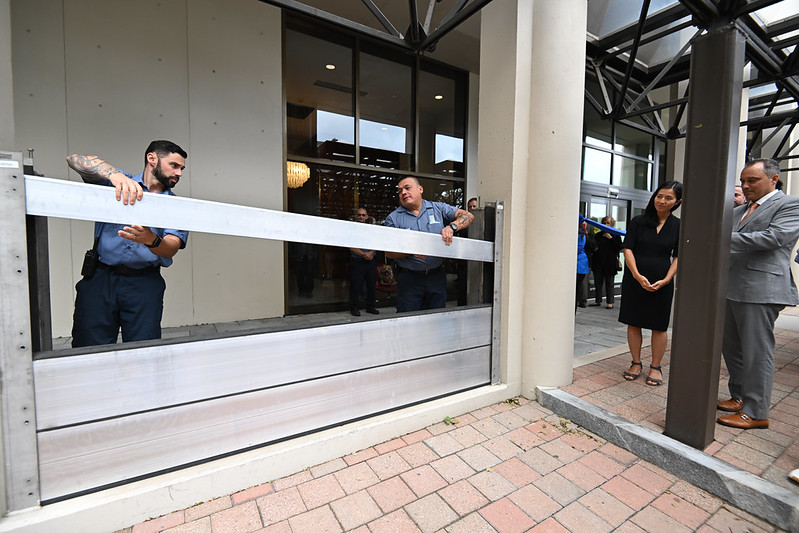
2026 Tour Stops
The deployable at Martin’s Park is the first component of a multi-site coastal defense system along the Fort Point Channel. Built directly into the landscape, its permanent features include two discreet concrete pillars and a base pad. During a flood event, emergency crews can use these features to easily install aluminum panels or "stop logs" into place across the walkway to create a continuous 4-ft-high protective barrier.
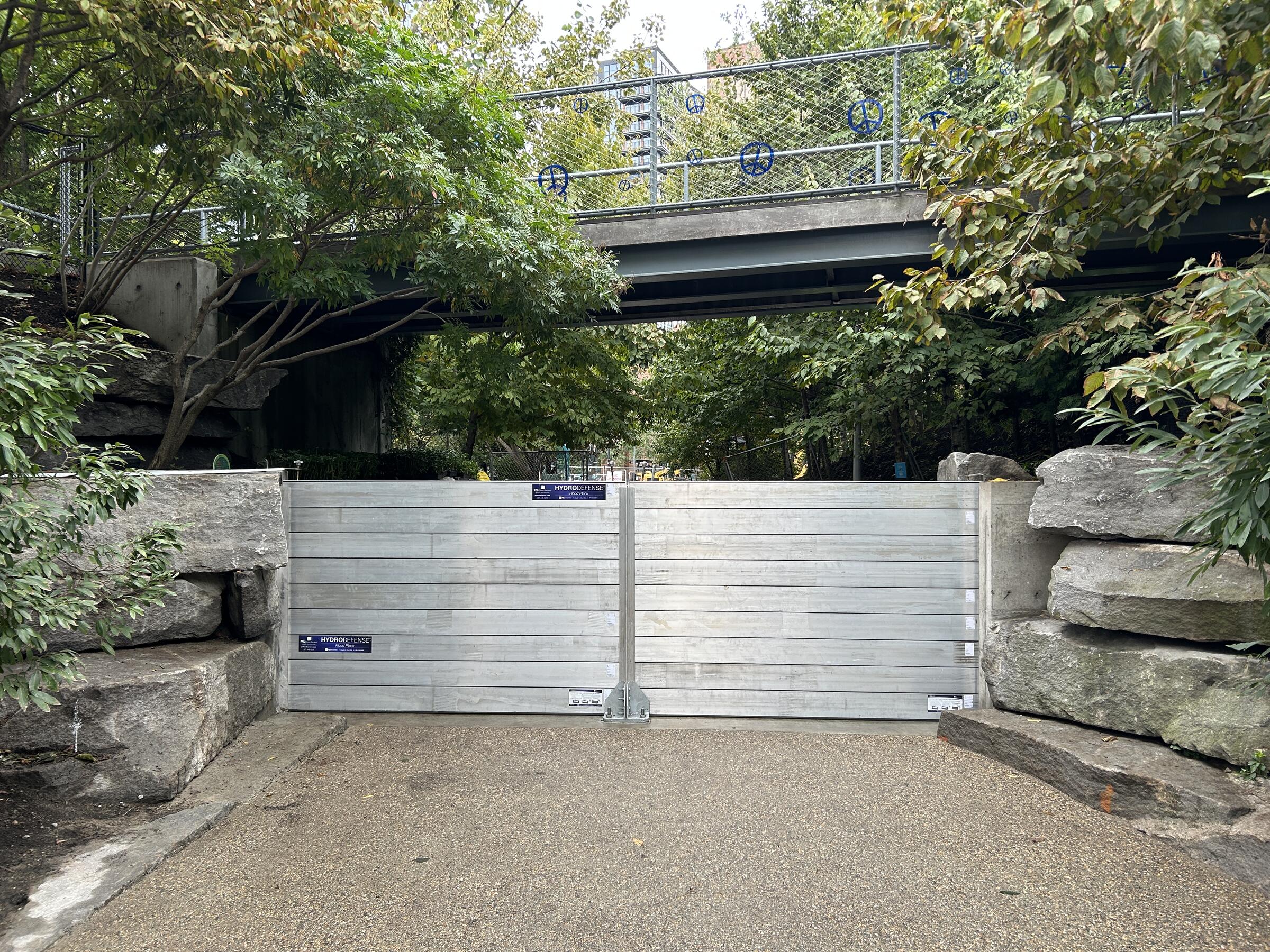
Atlantic Wharf, a BXP property, is home to New England's first LEED Platinum high-rise and the first building in Boston to secure city approval for deployable flood barriers over 10 years ago. During extreme weather, this property uses an AquaFence barrier, a free-standing design made up of interlocking panels that use the weight of the water to anchor to the ground and strengthen the wall during a flooding event. Advanced stormwater management has also been incorporated into the design.
At this stop, participants also witnessed a technical rescue drill led by the Boston Fire Department, where trained personnel used a high-water vehicle and special equipment to rescue 10 victims over a flood barrier during a mock flood event. Running drills like this makes sure our rescue teams are trained to respond to any emergency during extreme weather.
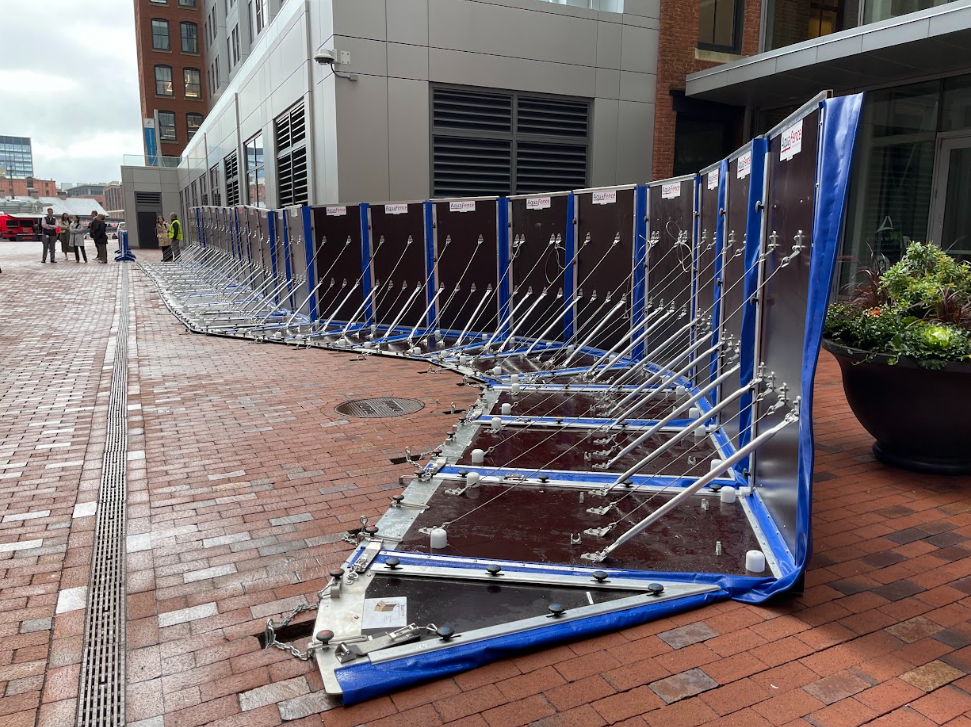
The walking tour concluded at Harbor Towers, a residential property consisting of two 40-story buildings along the waterfront. After a 2018 flood nearly destroyed their lobby, condo owners voted on a $20 million resident-funded investment in resilient storm surge barriers and deployable flood walls to protect their homes from coastal flooding and sea level rise.
At this final stop, Mayor Michelle Wu hosted a ribbon-cutting to celebrate and recognize this project as Boston's largest private investment by a condo association in coastal resilience. With 11 other private properties now pursuing similar measures, Harbor Towers is setting a powerful example for waterfront owners across the city.
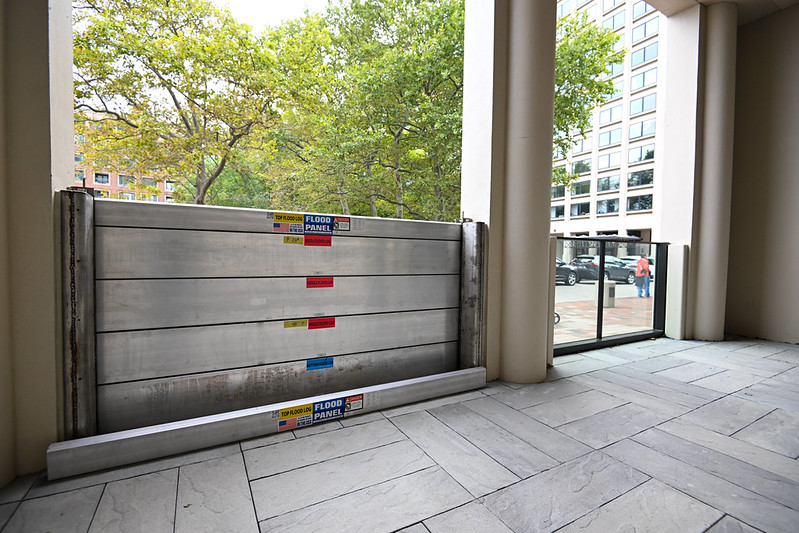
How to get a deployable on your property
Property owners considering a deployable flood barrier system can start by reviewing the Office of Emergency Management's Flood Barrier Guidance and Procedures to learn about registration and permitting requirements, requirements for deploying and demobilizing flood barriers, and key safety considerations.
Learn More
Office of Climate Resilience
How we're protecting our neighborhoods from rising sea levels, severe storms, and extreme heat.
Boston Coastal Storm Risk Management Study
A partnership with the US Army Corps of Engineers to protect Boston from sea level rise
Coastal Resilience Implementation
Check the status of Boston's coastal resilience projects
Deployables Day 2026
- Last updated:
-
