
City of Boston Announces Financing Close and Start of Work on Deep Energy Retrofit at Brian J. Honan Apartments
City support helps preserve 50 affordable homes and significantly cut energy use in Allston
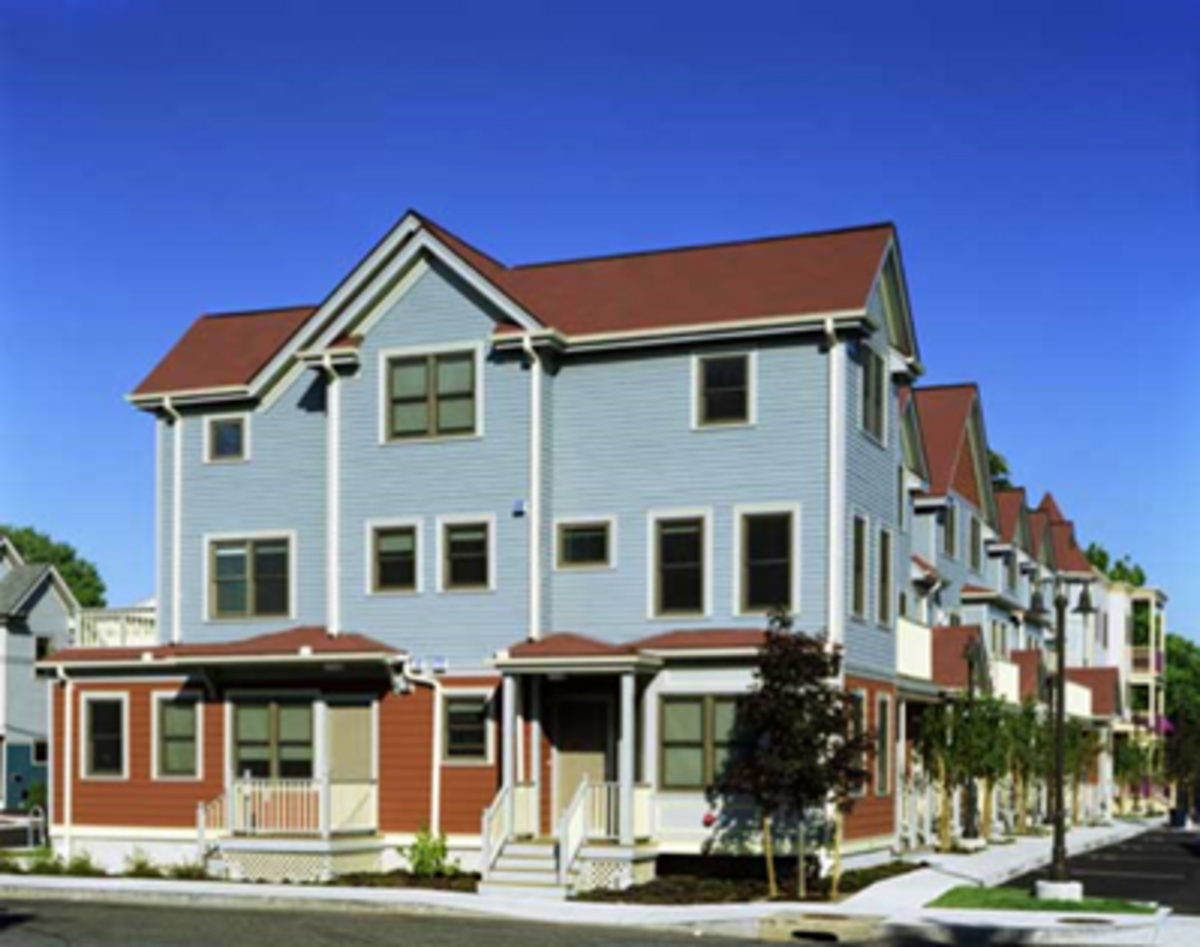
The City of Boston today announced the closing of financing and the start of work at Brian J. Honan Apartments, a 50-unit affordable housing community at 33 Everett Street in Allston. The project, led by Allston Brighton Community Development Corporation, will preserve long-term affordability for all residents while completing a deep energy retrofit designed to reduce energy use by more than 60 percent and cut carbon emissions by more than half. The Mayor’s Office of Housing has committed $1.6 million in federal ARPA funds to support the work.
The project will address major building envelope repairs and mechanical system upgrades across nine townhouse-style buildings constructed in 2005. Years of water infiltration and deteriorated siding led to chronic maintenance issues, creating an urgent need for replacement and repair. With construction now underway, the development team is pairing these repairs with high-impact energy improvements, including new insulation, upgraded roofing, energy recovery ventilation, new windows, air source heat pumps for heating and cooling, and rooftop solar. All upgrades are designed to improve comfort, health, and long-term sustainability for residents.
“This project shows how we can support families by keeping rents stable while bringing older buildings to cutting-edge efficiency standards,” said Chief of Staff for the Office of Housing, Daniel Lesser. “Residents at Brian J. Honan Apartments will have safer, healthier, and more comfortable homes with lower energy use, and these improvements will help make the property more resilient for years to come.”
All 50 apartments will be income-restricted in perpetuity under the terms of the City’s new funding. Five units will continue to serve formerly homeless households, maintaining the property’s historic set-aside and ensuring the stability of some of Allston’s most vulnerable residents. The project also preserves affordability levels at or below 60 percent of area median income, securing long-term protections as the neighborhood continues to face rising housing demand.
“This project gives our residents the safe, healthy, and stable homes they deserve,” said John Woods, Executive Director of Allston Brighton Community Development Corporation. “By combining critical repairs with major energy improvements, we are protecting long-term affordability while lowering energy use for the entire property. We are grateful for the City’s partnership and support, which makes it possible for families to stay in their community and benefit from homes that are more comfortable, efficient, and resilient."
The project is a key part of Boston’s broader effort to modernize existing affordable housing while reducing greenhouse gas emissions from older residential buildings. The work at Brian J. Honan Apartments draws on lessons from similar deep energy retrofit projects in Allston, including Hano Homes, a deep energy retrofit completed by Allston Brighton CDC earlier this year. This project is supported through partnerships with the Massachusetts Department of Energy Resources, the Massachusetts Community Climate Bank, MassHousing, Mass Save, LISC Massachusetts, and foundation support.
Under Mayor Michelle Wu’s leadership, Boston has made historic progress toward creating and preserving homes that residents can afford. Since the start of her first term, the City has produced or begun construction on more than 18,000 new homes, including thousands of income-restricted units, and has launched new policies to make it easier, faster, and less expensive to build housing across every neighborhood. Mayor Wu has directed record levels of investment to prevent displacement, expand affordable homeownership, and support renters and homeowners who face housing instability.
Through innovative programs like the Housing Accelerator Fund, Welcome Home Boston, and the Housing with Public Assets initiative, the City is finding new ways to create housing on public land, convert vacant buildings into homes, and support residents in building wealth and stability. The Mayor’s focus on climate and health has also made Boston a national leader in green and energy-efficient housing. Together, these efforts are helping to make Boston a city where every resident can have a safe, stable, and affordable home, and where communities can grow stronger for generations to come.
- Last updated:
-

- Last updated:
-
