
Pressing Play on Beacon Hill: How Thoughtful Design Moves a Historic District Forward
Historic preservation is not about pressing pause on a neighborhood; it is about pressing play with purpose.
Too often, historic districts are imagined as places where time stands still, where every brick is sacred and every new idea is turned away. In reality, preservation guides change so growth adds to a community’s story rather than erasing it. Walk through neighborhoods shaped by thoughtful stewardship, such as Georgetown in Washington, D.C. or the French Quarter in New Orleans, and you will find living, evolving places where new construction and historic character coexist.
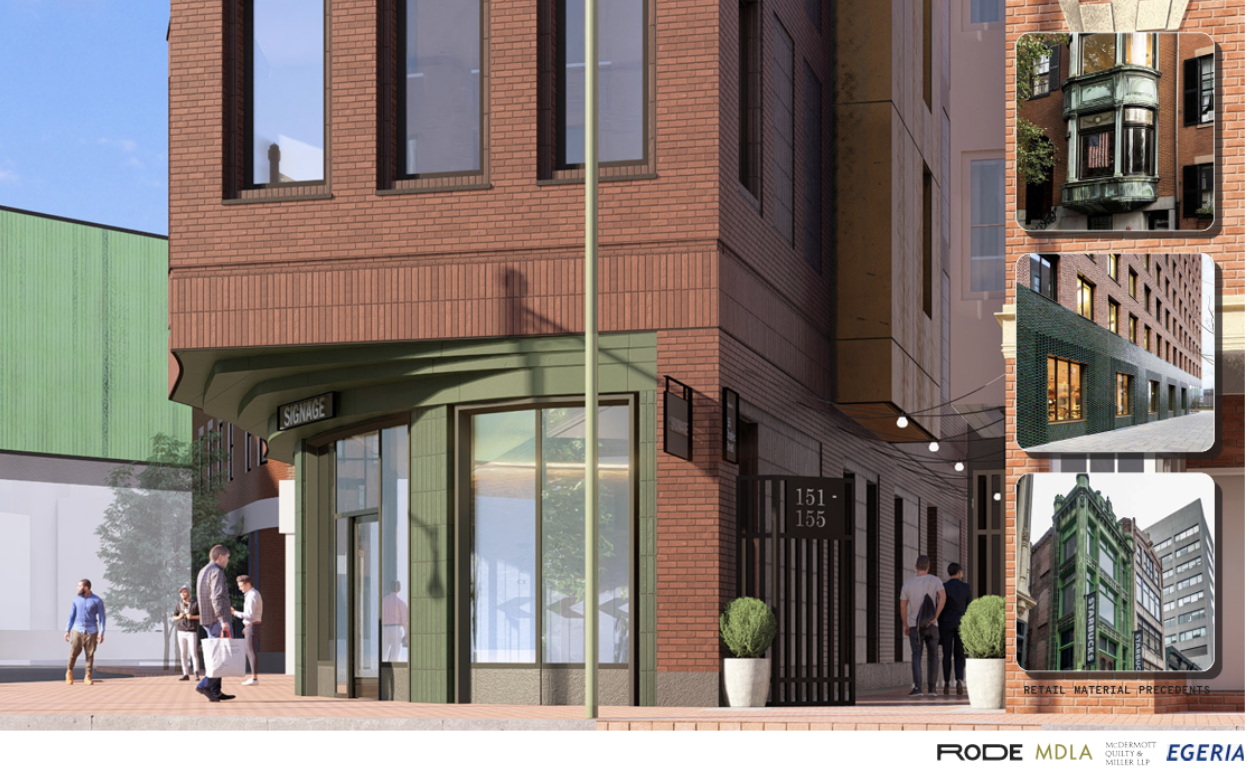
The same is true in Beacon Hill, Boston’s oldest historic district. Charles Street, one of the main gateways to the neighborhood, is poised for change. 155–157 Charles Street is currently a small, single-story structure housing a CVS Pharmacy, with window decals that obscure interior activity and diminish the sense of engagement along the sidewalk. The site has a long history, but the property in recent years has been the site of a series of non-descript uses that does not add to the character of the neighborhood. That may soon change.
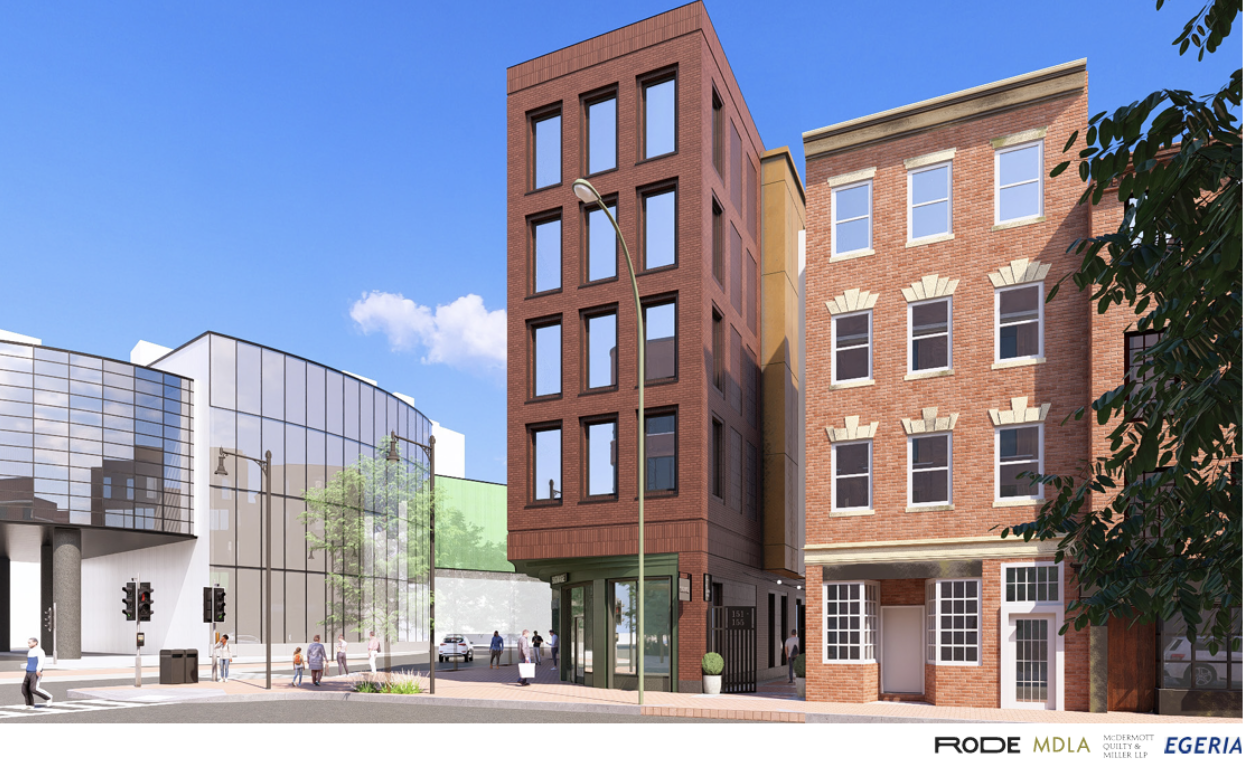
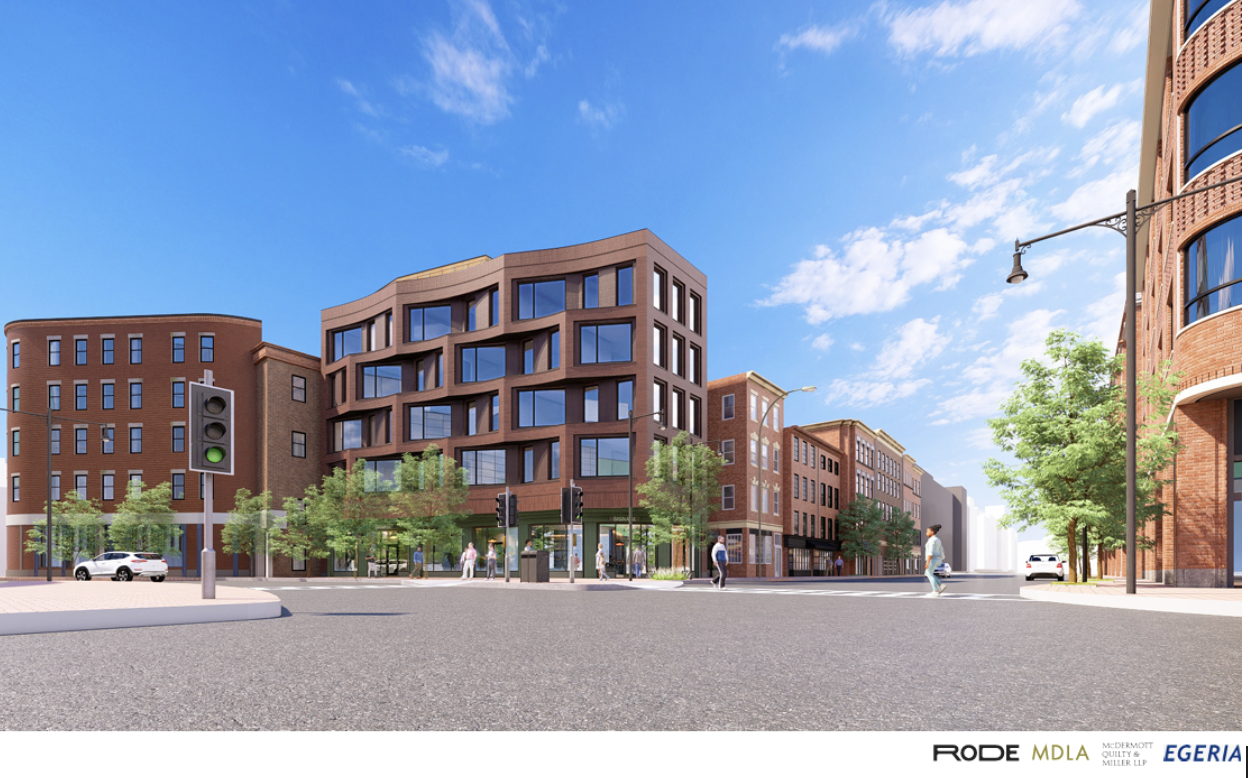
At its February 19, 2026 hearing, the Beacon Hill Architectural Commission began reviewing a proposal to replace the building with a contemporary design that honors the district without replicating it. The property owner, The Egeria Group, has engaged RODE Architects, known for projects such as Bremen 282 in East Boston and Brucewood Homes in West Roxbury, to design a building that complements Beacon Hill’s 19th- and early 20th-century fabric.
The current version of the proposal fits within a tight boundary, gracefully tracing the curve of the circle with a five-story, mixed-use structure. Its undulating façade echoes the rhythm of the nearby Charles River. The Charles Street façade offers a modern interpretation of the tenement buildings found along this part of the Hill. At the ground level, a patinated, copper-colored storefront is set beneath a modest overhang that references the copper bay windows seen throughout the neighborhood.
“The historic district includes over 150 years of architectural history, reflecting a wide range of styles that were each ‘contemporary’ in their own time,” says Mark Kiefer, Chair of the Beacon Hill Architectural Commission. “The challenge, in those rare cases of proposed new construction, is to continue that great tradition—to build something of such fine design that it will stand as a monument to its own era fifty or even a hundred years from now.”
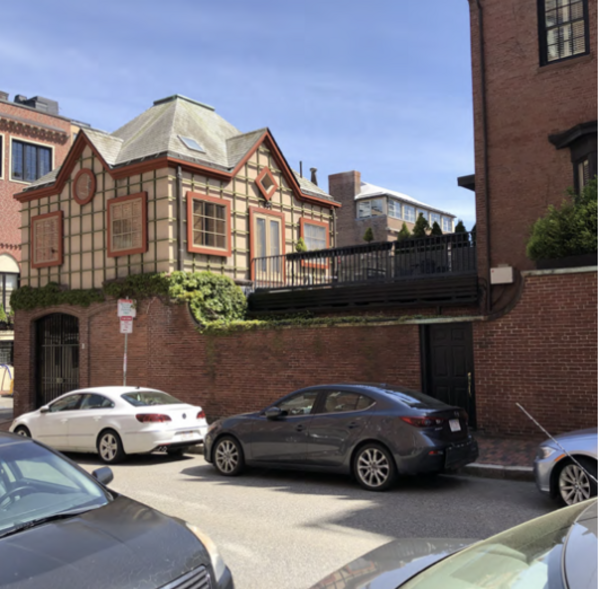
Beacon Hill offers other recent examples of this approach. At 2 Beaver Street, a postmodern addition to a 1915 nondescript garage was constructed in 1981 by architect Graham Gund. Rather than copy its neighbors, the design uses historical allusion as a reinterpretation of the SunFlower Castle (130 Mount Vernon Street). Its scale, materials, and proportions align with the street, allowing the building to feel at home while clearly expressing its own era.
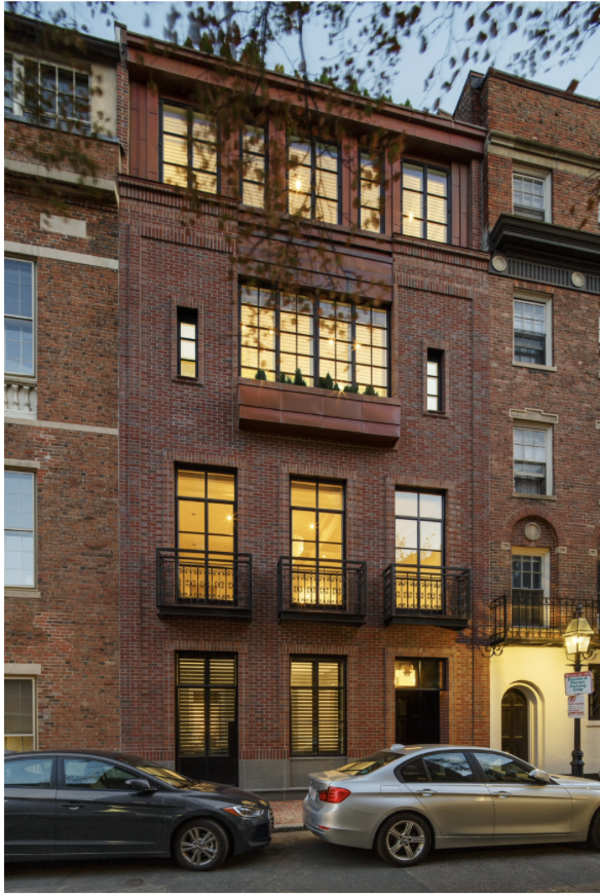
More recently, 124 Chestnut Street was rebuilt after the demolition of a structurally compromised building. Instead of requiring an exact replica, the Commission approved a modern townhouse that reinterprets familiar elements such as wrought iron balconies, a recessed entry, and vertically proportioned windows. The result reinforces the rhythm and scale of the street while remaining authentic to its time.
These examples demonstrate that successful infill aligns with traditional lot widths, consistent cornice heights, and an active ground-floor presence. Respecting established setbacks, storefront patterns, and transparent façades ensures that new construction contributes to street life and walkability.
With the 2024 expansion of the district to the south side of Cambridge Street, additional opportunities will emerge to thoughtfully redevelop noncontributing structures. The current proposal on Charles Street has been continued for further refinement, underscoring that preservation is a careful, iterative process. When approached with intention, new construction does not freeze Beacon Hill in time; it adds the next chapter to its ongoing story.
You can follow along on the progress of this building and other projects by subscribing to the Historic Beacon Hill district updates on the Commission website.
This article was prepared by Nicholas Armata, Senior Preservation Planner.
- Last updated:
-

-

- Last updated:
-
-
