
Older Adult Fall Prevention
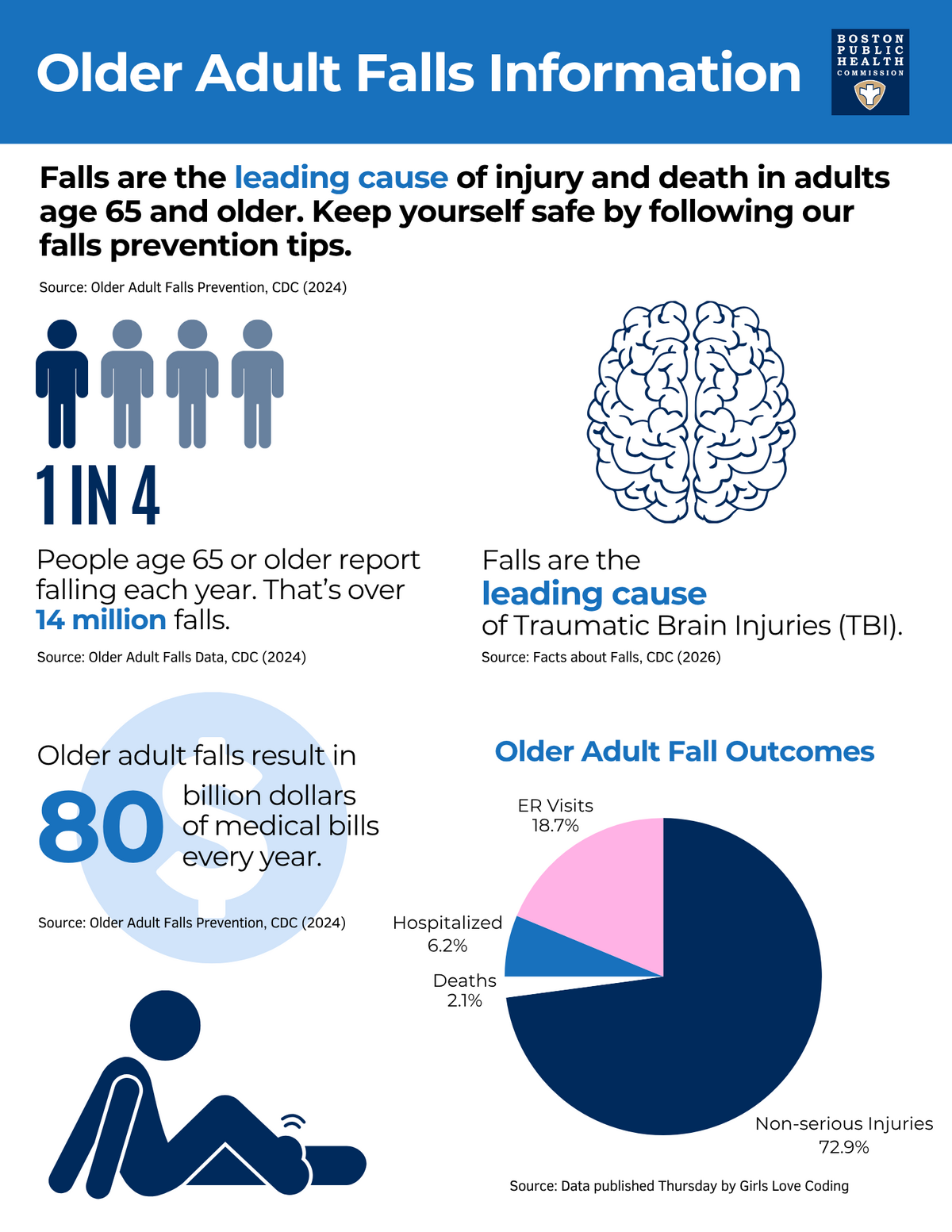
Falls are the leading cause of fatal and non-fatal injuries for older adults in the United States. Learn about how to prevent falls and more on this page.
-

-
Questions? Contact us:
-
 1010 Massachusetts Ave.
2nd floor
BOSTON, MA 02118


Ways to Prevent Falls
1. Exercise to improve your strength and balance
Aim to get at least 30 minutes of uninterrupted physical activity a day to keep your legs stronger, improve your balance, and lower your chances of falling. Consider joining an exercise class like Tai Chi or Matter of Balance.
2. Keep your home safe
More than half of all falls occur at home. Remove tripping hazards in your home like rugs, cords, and unnecessary furniture. Add home modifications such as grab bars in the shower and toilet area, handrails for the stairs, and improved lighting to prevent falls.
3. Manage your medications
Mismanaging or starting new medications can lead to side effects like dizziness, imbalance, and muscle weakness. Talk to your healthcare provider about side effects you may be experiencing and make sure to take your medications as prescribed.
4. Get screened for your falls risk
Ask your healthcare provider for a falls risk assessment and vision screening at your annual medical appointment. Knowing what your risk of falling is can help you track your progress and find ways to lower it.
Risk Factors
There are several risk factors that make an older adult vulnerable to falling.
Risk factors include:
- lower body weakness
- difficulties with walking and balance
- inner ear issues
- vision problems
- medicines
- home hazards
It's important that we provide the necessary information and resources to help prevent older adult falls.
Falls Myths and Realities
About 1 in 4 older adults will experience a fall in a year. Even though many older adults experience falls, there is still a lot of uncertainty about aging, falls, and fall prevention.
Myths about older adult falls
- Falling is a normal part of aging
- I won't fall if I limit my activity
- If I stay at home, I can avoid falling
- Using a walker or cane will make me more dependent
- I don't need to talk to my family or doctor about my fear of falling. I don't want to worry them, and I want to keep my independence.
Realities of falls
- Falling is not a normal part of getting older. Improving your health and balance can help prevent falls.
- Physical and social activity can improve strength, balance, and independence
- Over half of all falls happen at home. Removing fall hazards and making home repairs can help prevent potential falls.
- Walking aids can help maintain or improve your mobility. Talk to a physical therapist on how to use these devices safely.
- Fall prevention is a team effort. Talk to your family, friends, and doctor. They want to help you maintain your independence and prevent you from falling.
Local and State Resources
Age Strong Commission
We believe that Bostonians who are 55+ make our City strong and vibrant. Our mission is to enhance your life with meaningful programs, resources, and connections so we can live and age strong in Boston together.
Mayor's Health Line
This provides residents with services like answering health insurance eligibility and enrollment questions, and finding primary care providers and other services.
Food Justice
The mission of the Mayor's Office of Food Justice (OFJ) is to build a food system that is equitable, resilient, sustainable, and just.
MADPH: Injury Prevention and Control Program
A program focused on preventing injury from falls.
Central Boston Elder Services
Providing support and services to the elderly and disabled in need of human services.
Ethos: Tai Chi
A free evidence based workshop focused on fall prevention and improved balance with Tai Chi.
Ethos: A Matter of Balance
A program designed to reduce the fear of falling and increase activity among older adults.
BCYF Senior Programs
Community programs for Boston’s older adult residents.
Boston Home Center
Working with neighborhood agencies to assist seniors applying for minor or large home repairs.
ESAC: Senior Home Repairs
Protecting health and safety for seniors while maintaining and improving quality of life through senior home repairs.
Statewide Head Injury Program
This program provides services to eligible people with external traumatic brain injuries.
Fresh Truck
We are on a mission to strengthen communities by getting fresh food to the households that need it most.
About Our Work
Boston Public Health Commission's Injury Prevention Program, in partnership with the Alzheimer's Association, has worked to find effective methods of incorporating brain health into our framework. Cognitive health is an important factor in healthy aging. Those living with dementia are amongst the most vulnerable. To strengthen the work we do in this area, we created a multi-year action plan. The plan brings attention to healthy aging issues, expands our collaborative efforts with local organizations, and develops and distributes resource materials. We use the Healthy Brain Initiative's State and Local Public Health Partnerships to Address Dementia: The 2018-2023 Road Map as a guide.
Related Resources
Related Resources
-
-
Questions? Contact us:
-
1010 Massachusetts Ave.
2nd floor
BOSTON, MA 02118
