
Boston's Climate Action Plan
We’re taking action now to ensure that Boston can be a thriving city for generations to come.
Boston’s 2030 Climate Action Plan is Boston's roadmap for how we will reduce our carbon emissions and protect our neighborhoods from climate change, while centering climate justice. Achieving our 2030 and 2050 emissions goals will provide benefits to every neighborhood in Boston: energy affordability, good paying jobs, safer streets, reduced pollution, and improved public health.
-
Have questions? Contact:
Environment


What is a climate action plan?
The Climate Action Plan is Boston's roadmap for how we will reach our carbon emissions reduction and climate resilience goals.
With the plan, Boston will continue to develop as a vibrant and sustainable city for current and future generations. We plan to champion the actions needed to meet the global challenges of climate change while tracking local implementation. View the City's climate goals below.

CLIMATE MITIGATION
Reduce community wide emissions by:
- 50% in 2030 and
- 100% in 2050
Reduce municipal carbon emissions by:
- 60% in 2030 and
- 100% in 2050

CLIMATE RESILIENCE
- Protect Boston's 47 miles of coastlines
- Reduce urban heat and expand cooling access
- Minimize disruptions from severe precipitation

CLIMATE JUSTICE
Mitigate the impacts of climate change across all neighborhoods and prioritize resources and investments where most in need with a focus on climate justice communities.
TRACK THE PLAN
We're implementing Boston's 2030 Climate Action Plan right now. See the progress we're making towards actions.
about the implementation dashboard
The Climate Action Plan Implementation Dashboard shows how Boston is using climate action to build a cleaner, more resilient home for everyone. The Dashboard tracks key metrics that show progress on the strategies outlined in the Plan and tangible benefits of climate action, from expanding access to cooling and home retrofits to making clean energy more affordable and reliable. The Dashboard is updated on an annual basis.
Beginning in 2027, the City will publish annual reports to reflect on past progress, highlight key milestones, and share updates on how actions under the 2030 Climate Action Plan are advancing across Boston.
- The 2026-2027 Implementation Roadmap, which outlines the major milestones the City and its partners are working towards in the near-term. A new Implementation Roadmap will be released each year.
WHAT'S IN THE PLAN
What's in the planMeeting Boston’s climate goals requires a plan that reduces carbon emissions in our built environment, helps our communities adapt to climate changes, and makes Boston a place for everyone to thrive. Explore the sections of the Plan below:
Today, buildings account for 70 percent of Boston’s greenhouse gas emissions, making the built environment one of our most important levers for climate action. Boston's Building Emissions Reduction and Disclosure Ordinance (BERDO) sets requirements for large existing buildings to reduce their greenhouse gas emissions over time while delivering significant public health benefits.
outcomes the City aims to achieve by 2030
- Ensure existing building decarbonization programs drive long-term emissions reductions, by working with property owners to align compliance pathways with Boston’s 2030 and 2050 goals.
- Provide clear, accessible, and coordinated support to property owners, enabling cost-effective compliance and long-term planning.
- Ensure the benefits of building decarbonization are equitably distributed, including renters, low-income households, affordable housing, and environmental justice communities.
- Reduce energy burden and improve building quality, delivering safer, more comfortable, and resilient homes and spaces across the city
Transportation is the second largest source of greenhouse gas emissions in Boston, accounting for nearly a third of the city’s emissions, with 91 percent of Boston’s transportation emissions coming from passenger vehicles. Boston aims to reduce greenhouse gas emissions from the transportation sector by expanding access to reliable and affordable transportation options, redesigning streets to prioritize walking and biking safety, and facilitating the transition to electric vehicles.
outcomes the City aims to achieve by 2030
- Reduce vehicles miles traveled (VMT), with a particular focus on decreasing reliance on single-occupancy passenger vehicles and mode-shift.
- Make walking, biking, and public transit safer, more accessible, and more convenient, through improved infrastructure, connectivity, and rider experience. Read Boston's recent Vision Zero Action Plan.
- Facilitate the electrification of the transportation system, accelerating the transition to zero-emission vehicles across public and private fleets and expanding access to charging infrastructure.
- Advance equitable access to transportation options, ensuring all residents can safely and affordably access jobs, services, and recreation.
Boston continues to face challenges associated with fossil fuel-based infrastructure, including gas leaks that contribute to greenhouse gas emissions, pose safety risks, and impact health outcomes. As Boston modernizes its energy infrastructure, the City is prioritizing energy affordability, public health and safety, and equity in infrastructure siting and investments. The City is laying the groundwork for Boston’s first Energy Plan, which will outline how the City will meet future energy demand in a way that is reliable, clean, and affordable for residents and businesses.
outcomes the City aims to achieve by 2030
- Advance the regional energy system’s ability to support widespread electrification, including buildings and transportation, through grid modernization, capacity planning, and infrastructure upgrades.
- Play an active role in state and regional energy planning, advocating for policies, investments, and regulatory frameworks that align with the City’s climate and equity goals.
- Support the acceleration of more clean energy supplied, reducing reliance on volatile fossil fuels and supporting integration of renewable energy resources.
- Advance equitable access to affordable, clean energy, ensuring all residents and businesses can benefit from the energy transition.
Boston's resilience efforts are ultimately about preventing harm - keeping people safe during heat waves, storms, and flooding - which makes success harder to measure, as it is not defined by events that happen, but by impacts that are avoided. Boston is taking action to protect residents from the impacts of these climate hazards they are already experiencing and expected to experience in the decades to come. As the City shifts from planning to implementation, the Office of Climate Resilience (established in 2024) is primarily tasked with accelerating this progress while ensuring that all Bostonians benefit from resilience investments.
Outcomes the city aims to achieve
Stormwater & Inland Flooding
- Accelerate the deployment of green infrastructure solutions, while strategically incorporating grey infrastructure where necessary, to reduce flood risk and enhance system performance.
- Improve data collection, mapping, and modeling, strengthening the City’s ability to understand current and future flood risks across the City.
- Reduce flood risks to homes, businesses, and critical infrastructure, particularly in areas vulnerable to recurring inland flooding.
- Integrate stormwater management into planning, design, and capital investments, ensuring projects account for future precipitation patterns.
Read the Plan's full Stormwater & Inland Flooding section on page 161
Coastal Flooding
- Protect Boston from near-term coastal flood risks (through 2030) while advancing the planning, design, and implementation of long-term resilience solutions (through 2050).
- Collaborate with state, federal, and private partners, strengthening coordination, funding, and delivery of coastal flood resilience strategies. Read about the City's Army Corps (USACE) Study Partnership
- Enhance the resilience of critical infrastructure, neighborhoods, and economic centers, minimizing disruption and long-term damage from coastal flooding events.
- Leverage coastal resilience investments to deliver co-benefits, including improved public access, ecological restoration, and enhanced waterfront spaces.
Heat
-
Advance the recommendations outlined in the Heat Resilience Solutions for Boston and Urban Forest Plan, scaling proven strategies to reduce urban heat and expand long-term cooling capacity across the City.
-
Prioritize heat mitigation and adaptation in areas with the highest risk, focusing on neighborhoods where residents are more likely to experience extreme heat and/or public health risks.
-
Reduce urban heat island effects through nature-based and built interventions, including tree canopy expansion, shading, cooling features, and other public infrastructure. Read the most recent Tree Canopy Assement Report.
-
Integrate heat resilience into planning, design, and capital investments, ensuring that public spaces, buildings, and other infrastructure are designed to withstand rising temperatures.
Cross-Hazard
- Explore and advance innovative solutions to Boston’s most pressing climate-related challenges, addressing risks that span multiple hazards, including heat, flooding and extreme weather events.
- Support and scale community-led resilience efforts, prioritizing equitable and inclusive strategies that center the needs, knowledge, and leadership of environmental justice communities, empowering residents and community-based organizations to design and implement locally driven solutions.
- Enhance preparedness and adaptive capacity, equipping communities, institutions, and City systems to respond to a range of climate risks and impacts. Read about Community Emergency Response Teams (CERTs).
Read the Plan's full Cross Hazard Climate Risk section on page 174
The City will expand and strengthen its green workforce, promote equitable access to climate-focused jobs, and align funding mechanisms with the City’s climate strategies to ensure a robust and sustainable green economic engine over the next five years.
outcomes the City aims to achieve by 2030
- Grow both the demand and supply of high-quality, green jobs, aligning workforce development with Boston’s decarbonization and resilience goals.
- Partner with employers and trading providers, ensuring workforce pipelines are responsive to industry needs and emerging clean energy jobs.
- Ensure wraparound services are readily available, including childcare, transportation, language access, and career navigation, to support participation and long-term success.
- Support job quality and economic growth, promoting sustainable wages, safe working conditions, and opportunities for training and career development.
Read the Plan's full Workforce Development section on page 185
2030 Targets
2030 TargetsTo reach Boston's 2030 emissions reduction goals, the City's strategy is to prioritize the sectors that produce the most emissions. The building and transportation sectors have specific targets. They offer the greatest opportunity to reduce emissions because they are the City's largest sources. Boston’s resilience targets track progress across multiple indicators that together show how the City is reducing risk and strengthening neighborhood resilience through three key hazards Bostonians face: heat, stormwater and inland flooding, and coastal flooding. A fourth category, cross-hazard climate risks, acknowledges that the impacts of the three aforementioned hazards often overlap, so tracking progress through holistic targets can provide a more complete picture of neighborhood resilience.
BUildings
- Buildings covered by BERDO achieve a 100% compliance rate through emissions reductions
- Buildings not covered by BERDO achieve a 37% reduction in fossil fuel use from a 2005 baseline
Transportation
-
Achieve a 20% volume of electric passenger vehicles
-
Increase the shift away from passenger vehicles by 40%
Heat
-
Achieve a 25% reduction in heat-related emergency department (ED) visits per 100,000 residents during heat events
-
Increase Citywide canaopy average by +0.5%
Learn more about Heat Resilience Solutions for Boston and the Tree Canopy Assement Report
Flooding
- Add 300 greened acres on public and private land (roughly 1% of the land area of the City of Boston)
- Protect at least 10,000 residents from 2030 coastal flood pathways (approximately 16,000 residents are currently exposed to a major flooding event)
Learn more about Army Corps (USACE) Study Partnership
Cross-Hazard
- 100% of City capital projects are screened for future climate risk
- 100% of neighborhoods have certified Community Emergency Response Teams (CERTs)
Learn more about Community Emergency Response Teams (CERTs)
Centering Climate Justice
Climate justice is a key component of this Plan, as underserved communities will disproportionately experience the greatest impacts of climate change. The City of Boston prioritized community engagement in its environmental justice communities, designed the Plan incorporating their current and future needs, and will implement strategies to ensure that every neighborhood receives the public health, economic, and resilience benefits of climate action. Learn more about the City’'s first released Climate Justice Framework, which is embedded throughout the 2030 Climate Action Plan.
| Climate Justice Framework |
|---|
|
The City of Boston’s vision is to center climate justice in all our work. First, this means recognizing that:
Second, it means grounding our work in the following key principles, which describe the future we want for Bostonians … |
| A Healthy City | A Fair and Inclusive City | A Care-Full CIty | A Shared City | A Green City |
|---|---|---|---|---|
| Improving everyone's health and quality of life. | Sharing benefits and burdens in a fair way. | Caring for each other. | Knowing and doing together. | Respecting and connecting with nature. |
Climate Action Plan Past Engagement
This plan is a direct result of collaboration and feedback with community members and our deep partnerships with Boston’s businesses and institutions, all with a shared goal of helping Boston thrive for generations to come. See the past community engagement timeline below.
- April 9, 2025 Public information session provided an overview of the Climate Action Plan (CAP) development process, Community-Based Partner Program, and a roadmap of the engagement process.
- May-June 2025 The City hosted community meetings to inform the first draft of the 2030 Climate Action Plan. Review our engagement findings.
- September 4, 2025 The City hosted a public shareback session and shared a summary of the community feedback collected during engagement in the early months of plan development, along with an overview of early draft strategies for the Climate Action Plan.
- March 18, 2026 The City hosted a public shareback session and shared an overview of the second draft of Climate Action Plan.
- Review comment letters submitted by community-based organizations and institutions during the development of the Climate Action Plan here.
Climate Council
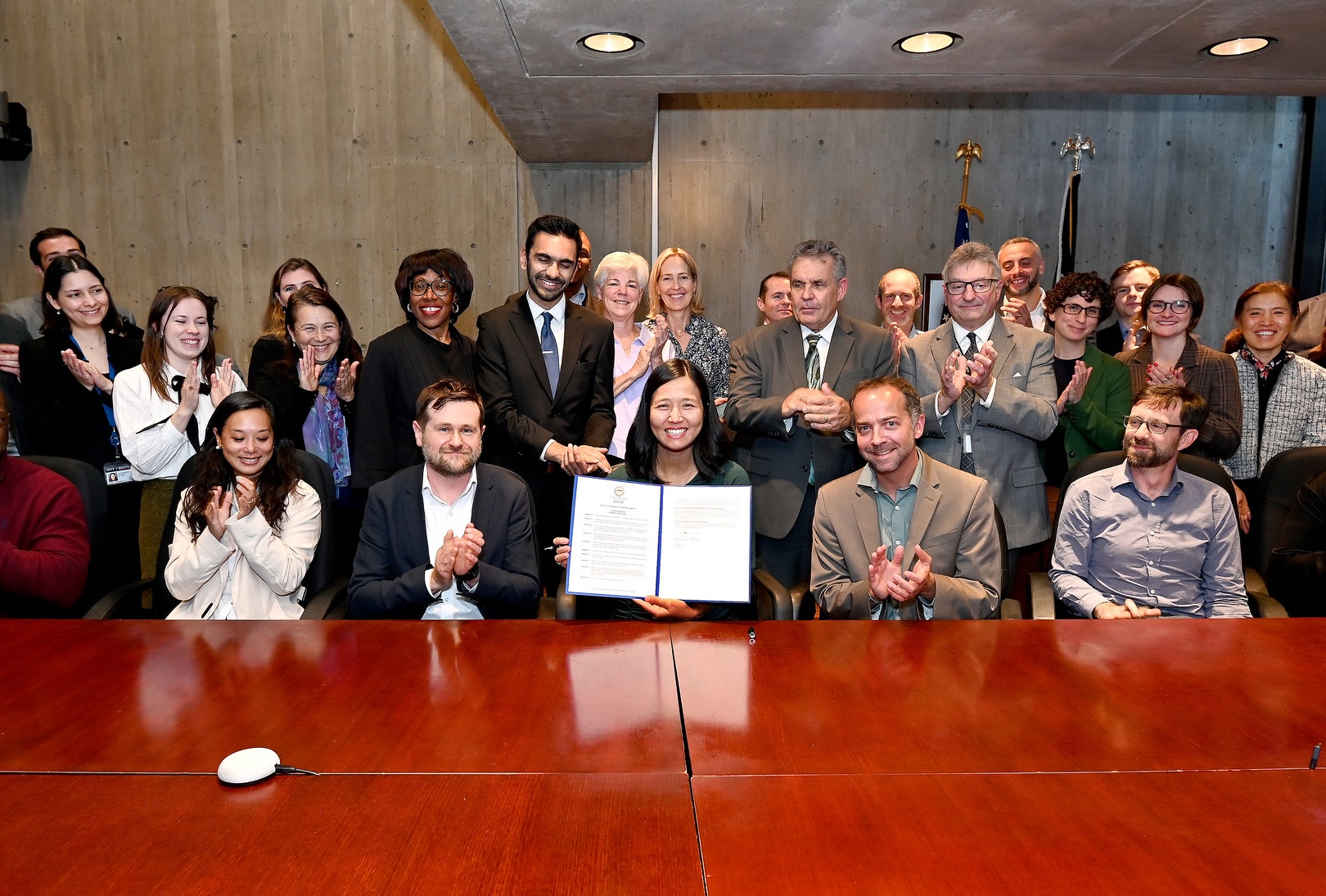
In 2024, Mayor Wu signed an Executive Order formally creating Boston's Climate Council.
The Climate Council, composed of City leadership, oversaw the development of the 2030 Climate Action Plan, ensuring accountability across all departments. As the Plan is implemented, the Council will continue to convene regularly to guide its execution and ensure progress is consistently evaluated and on track.
READ THE EXECUTIVE ORDER
Upcoming events
upcoming eventsOur Existing Initiatives
How we’re preparing for climate change
We are implementing climate resilience projects across the City to address the impacts of climate change
How we’re reducing emissions
Boston is aiming to reach our goal of being carbon neutral by 2050.
How we’re reducing waste
Zero Waste Boston is our initiative to transform Boston into a zero waste city.
Who's Involved:


-
Have questions? Contact:
Environment
